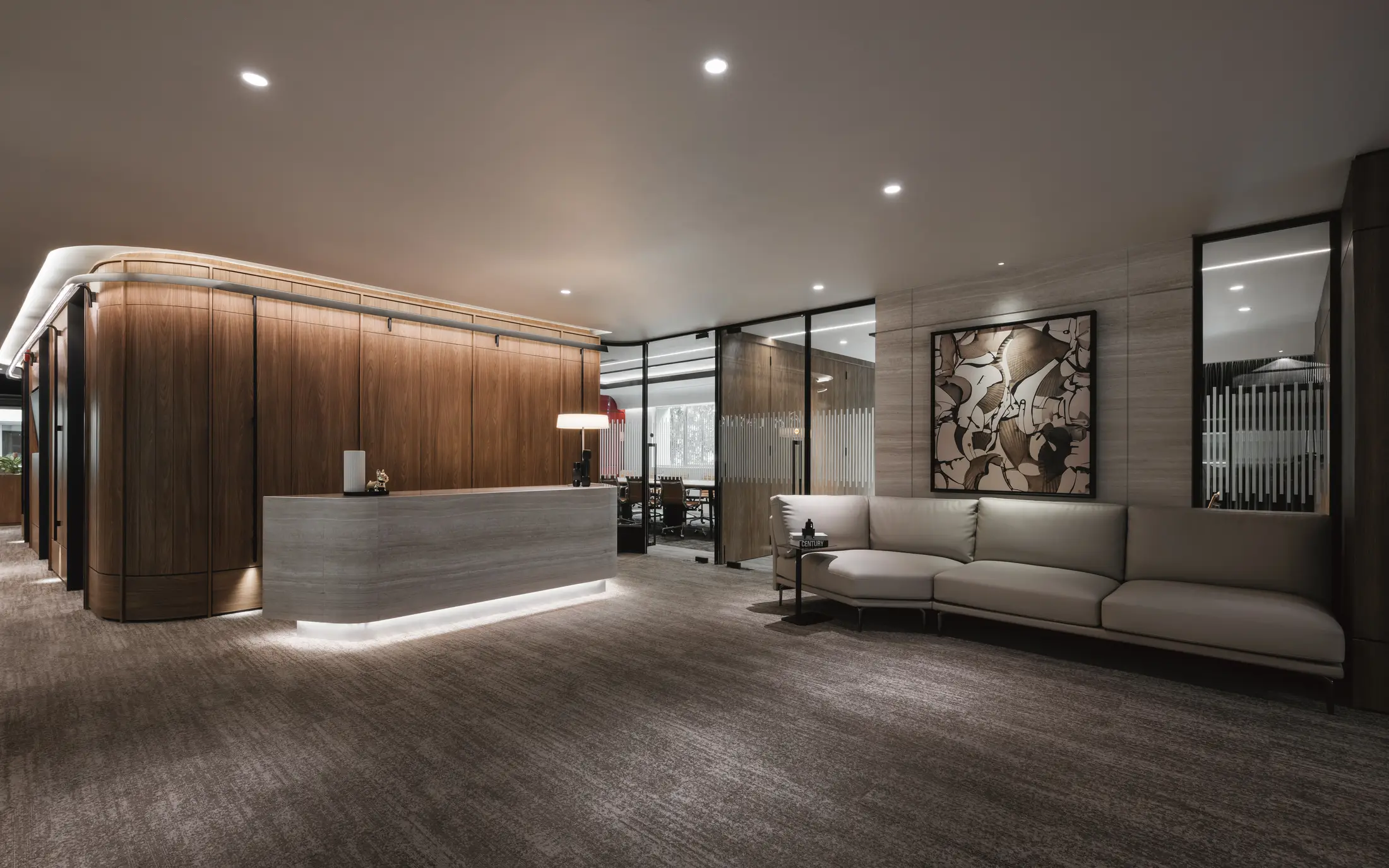
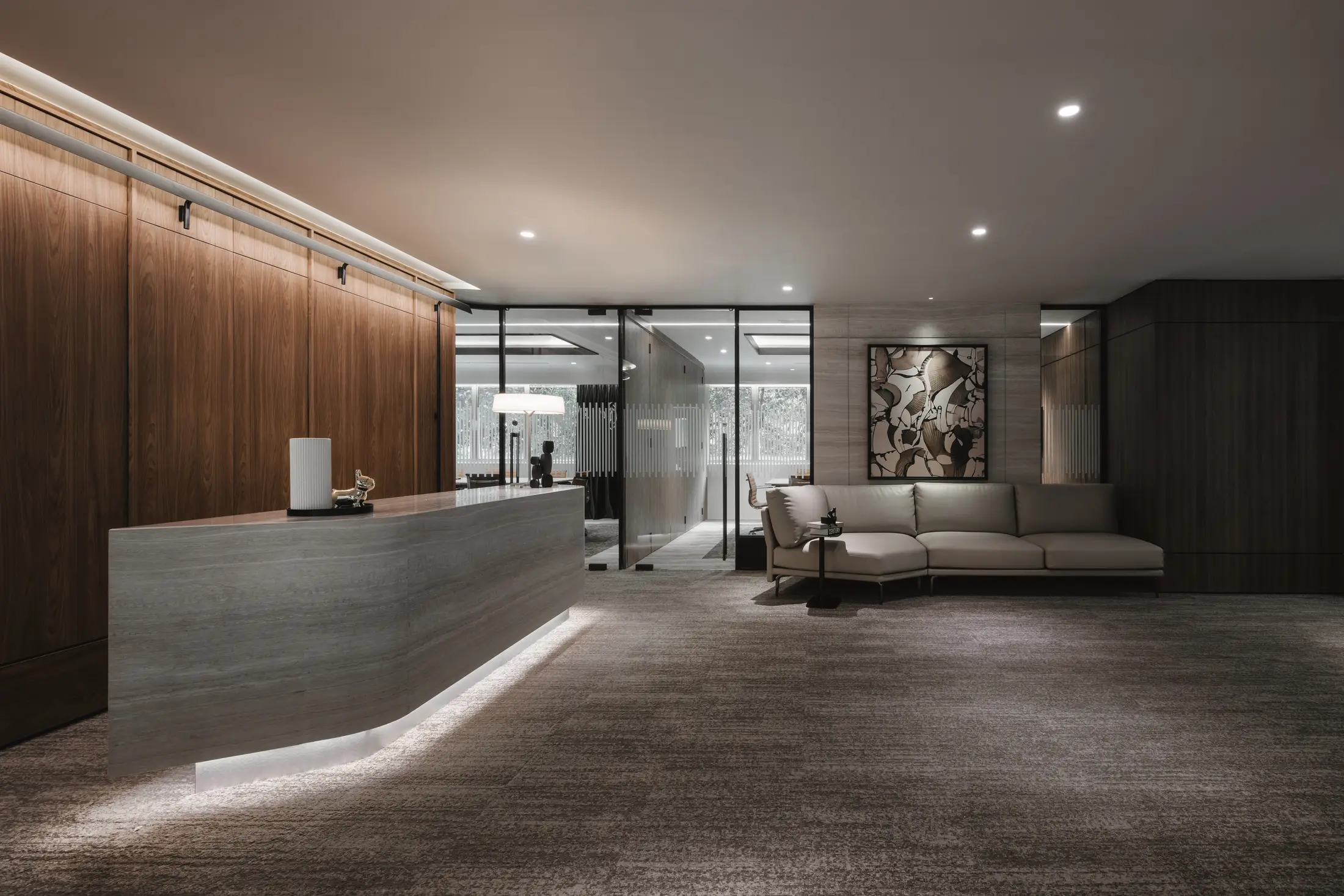
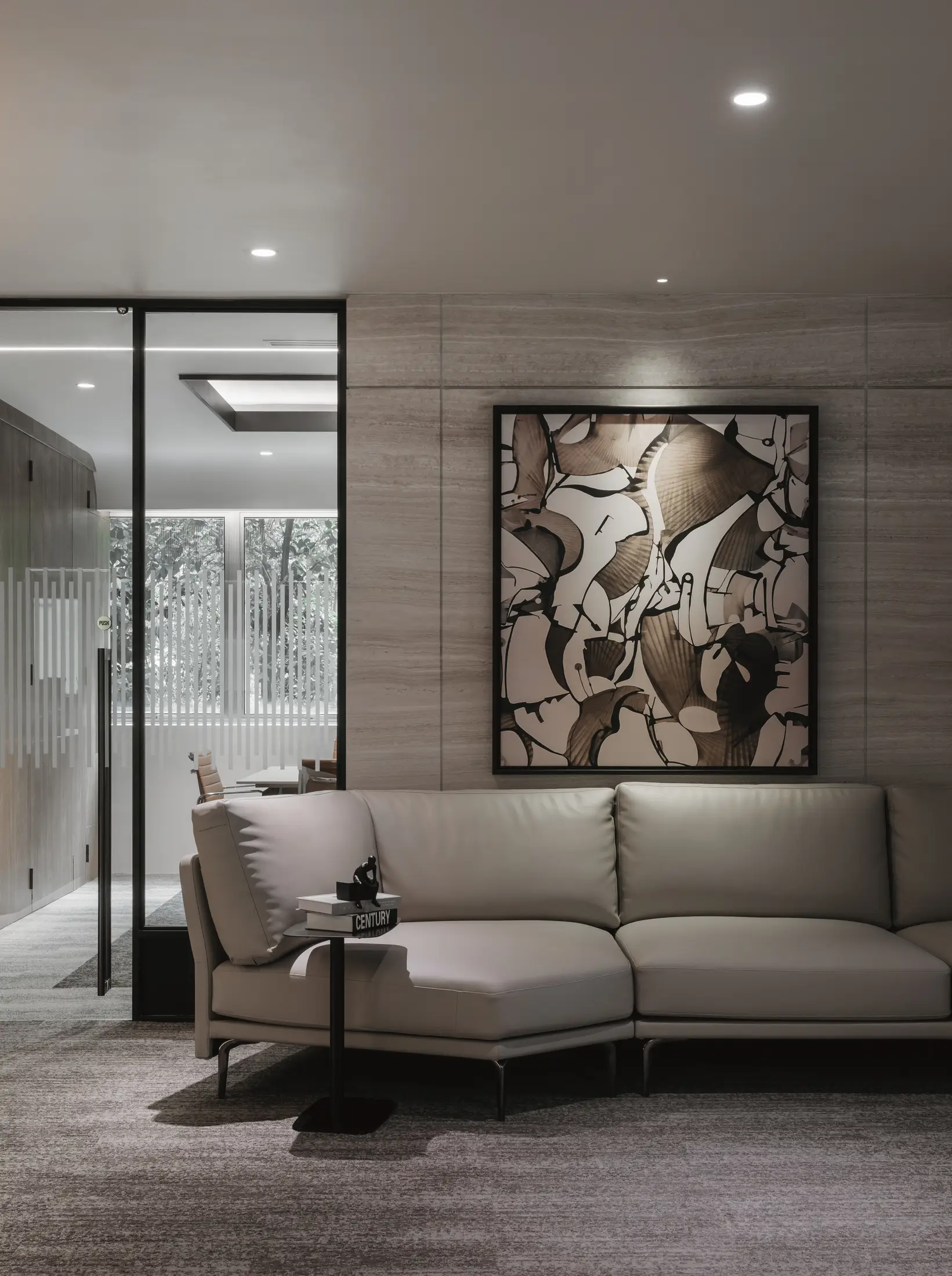
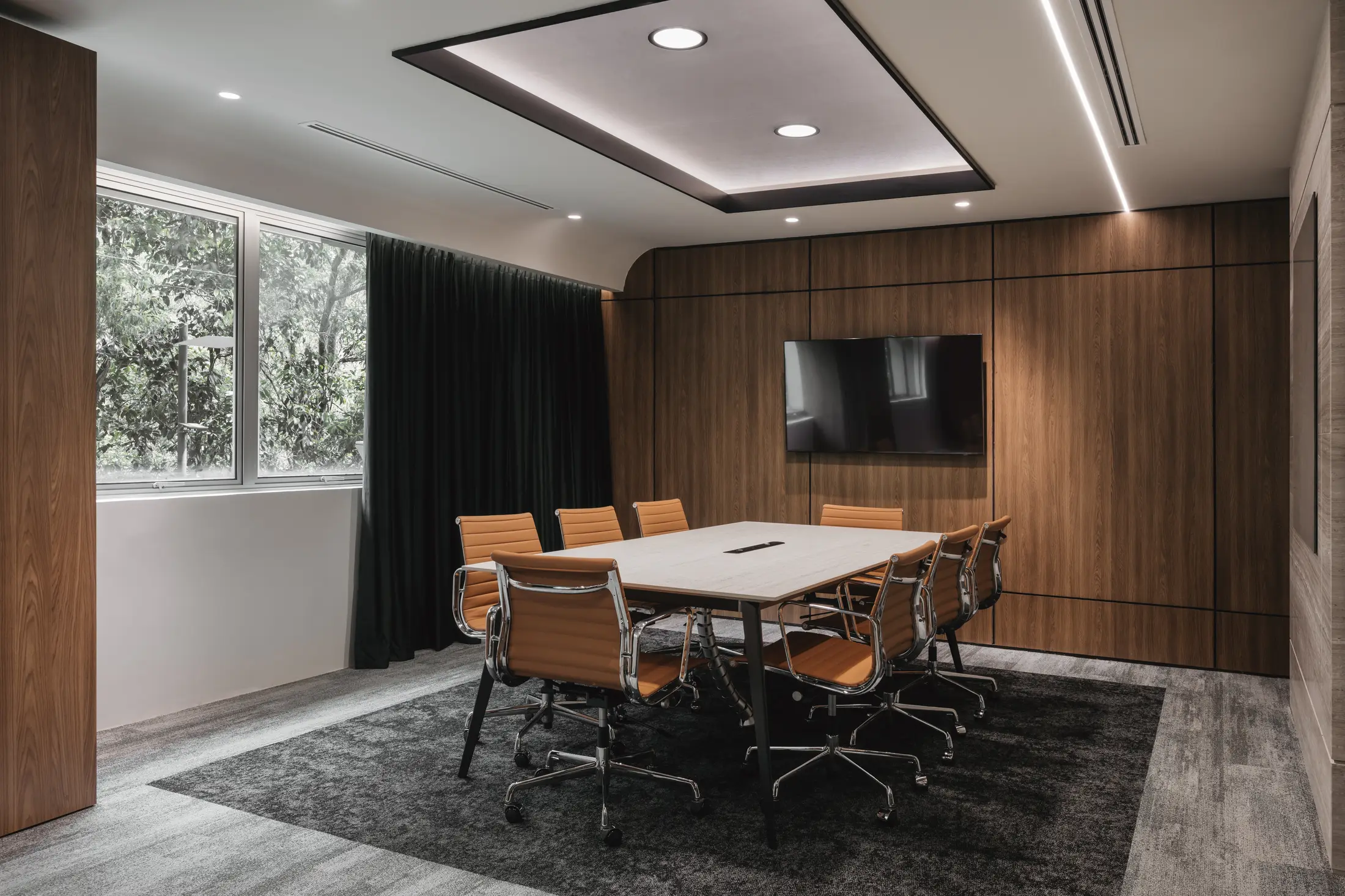
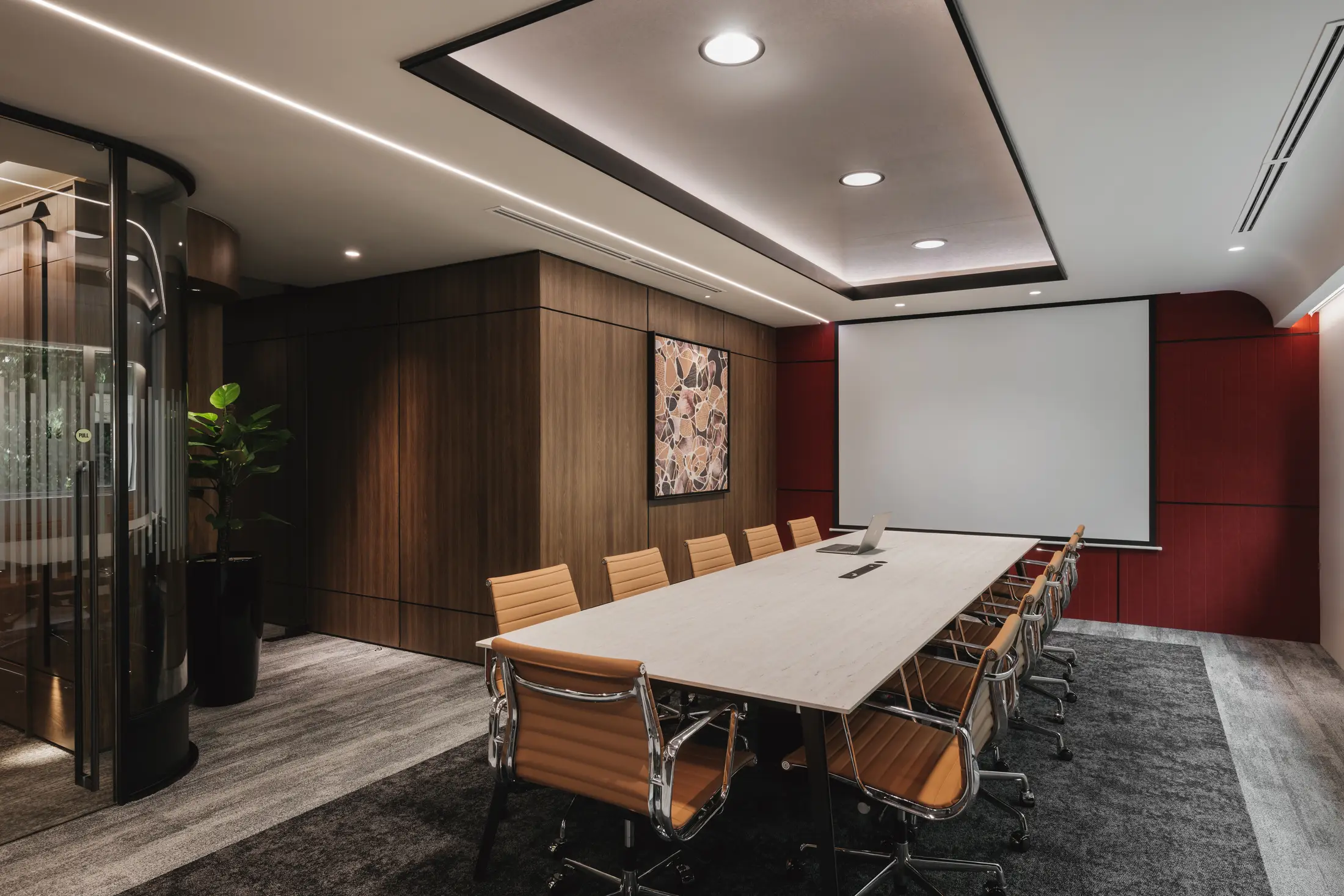
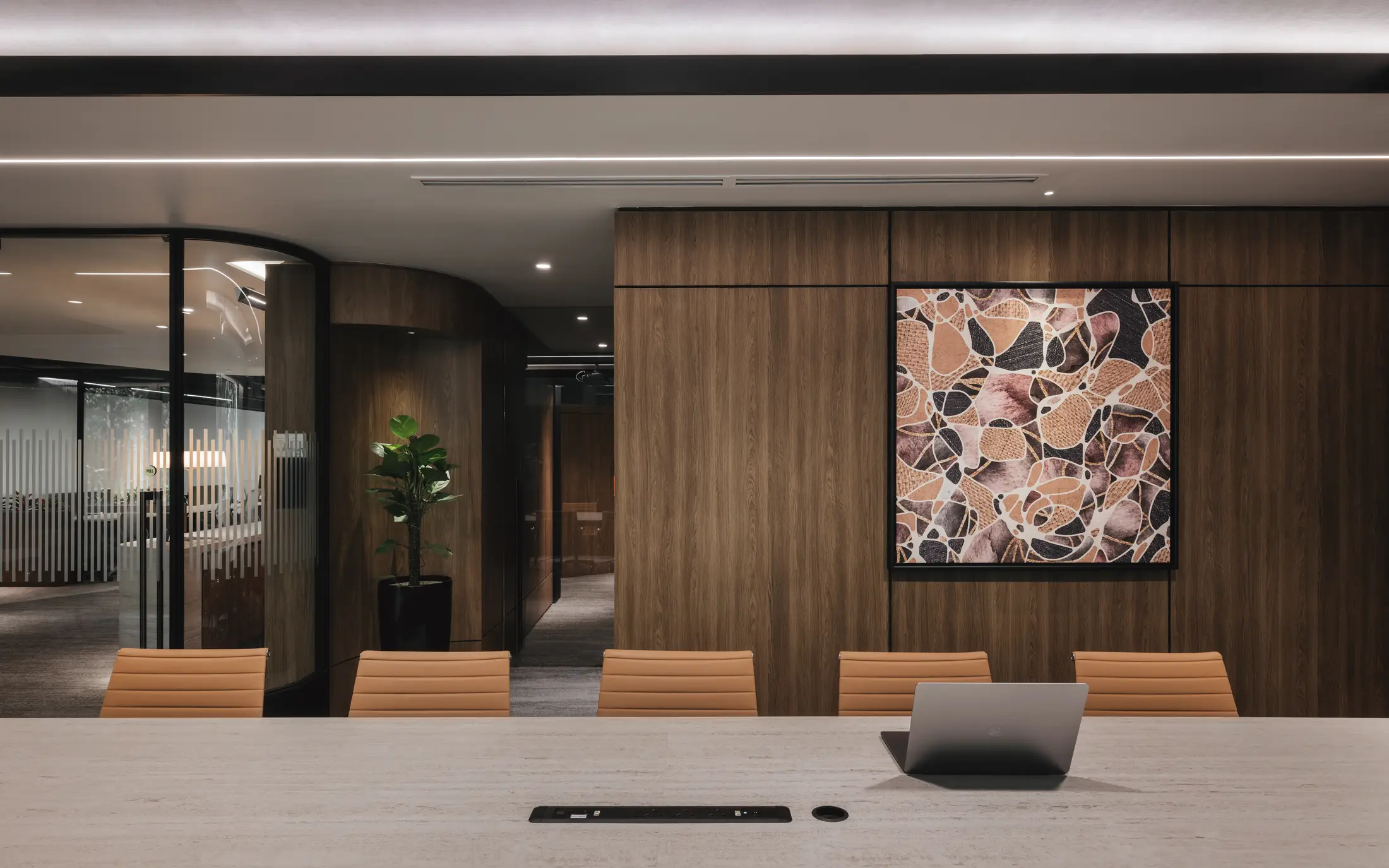
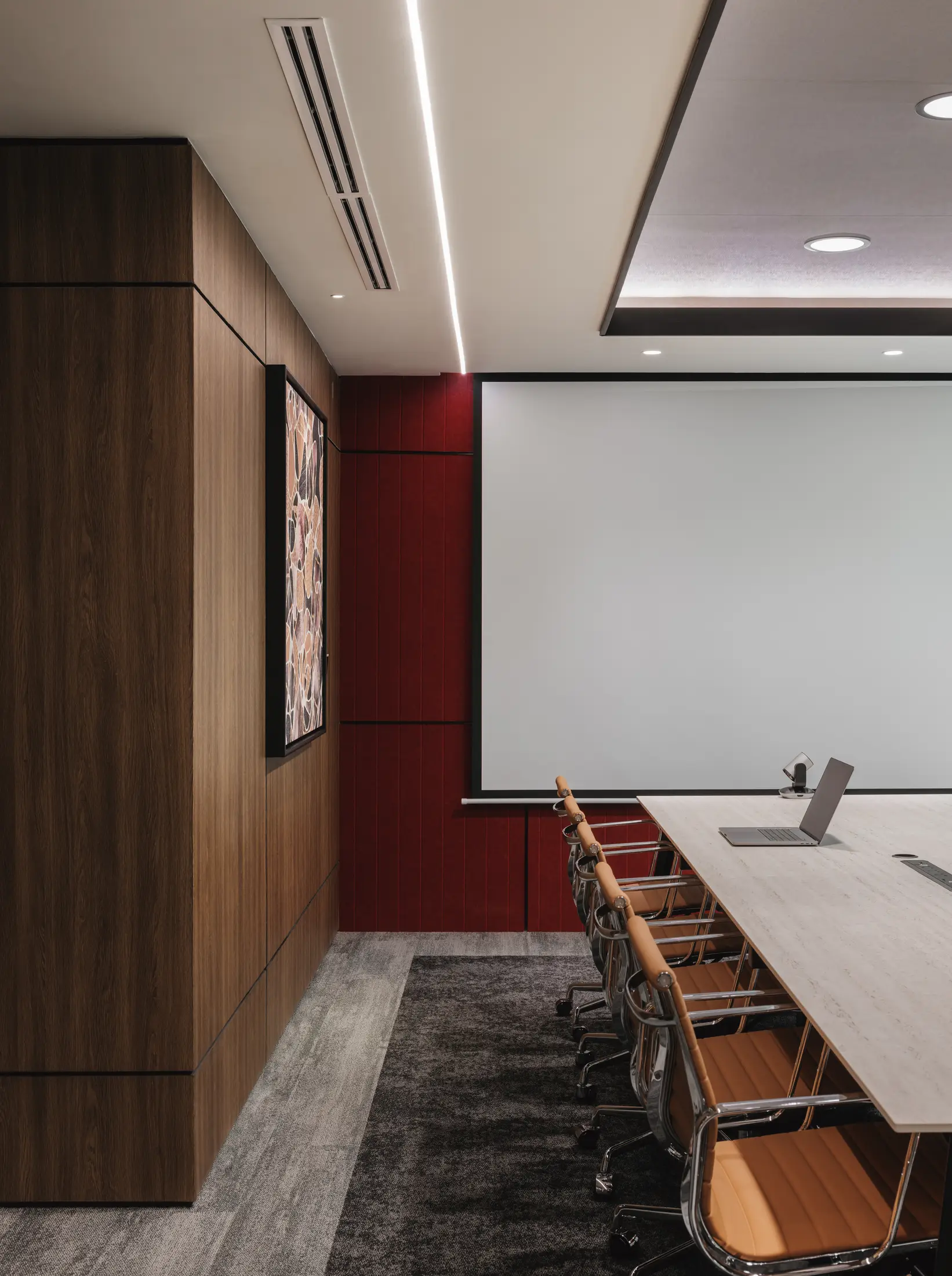
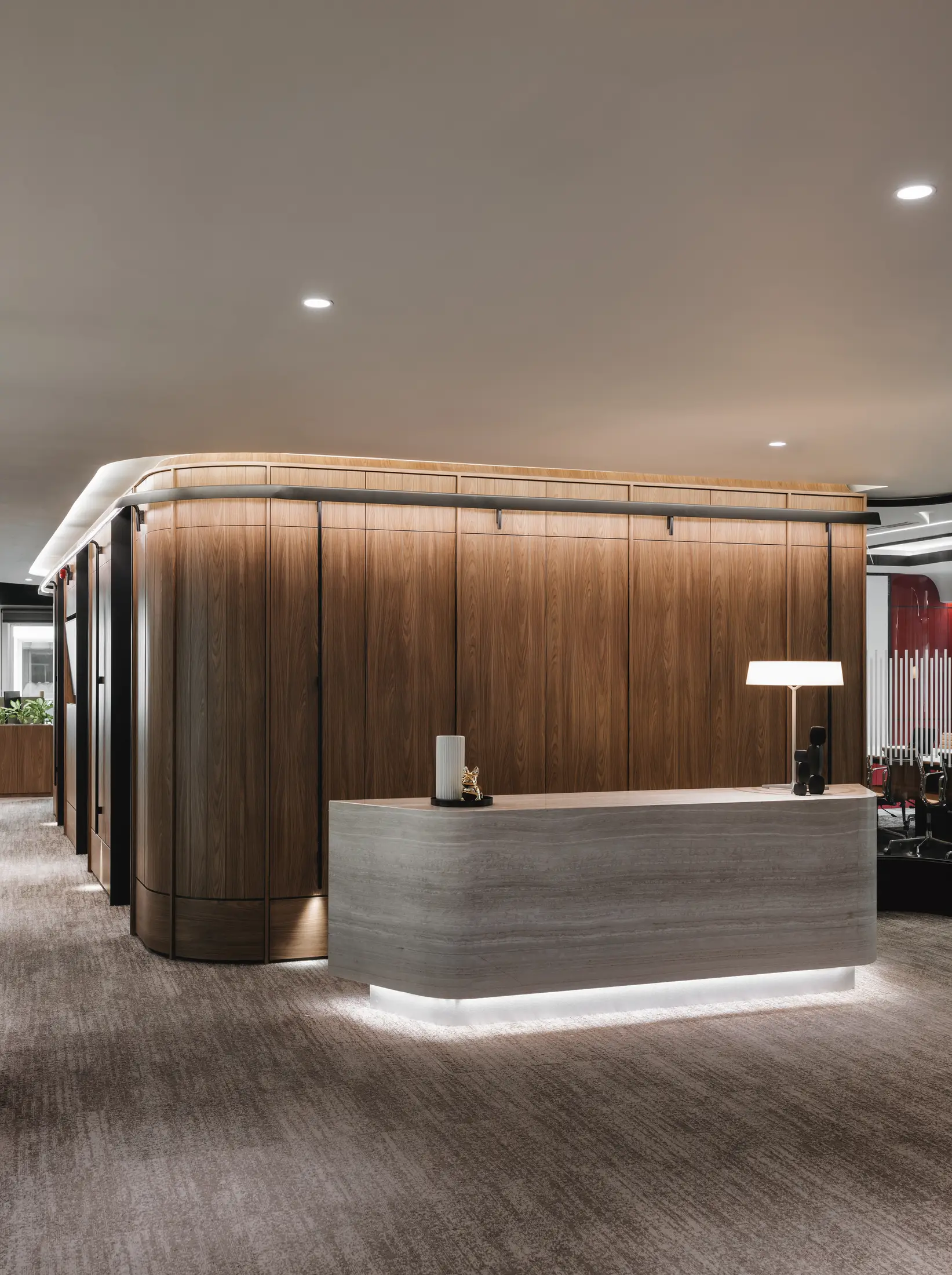
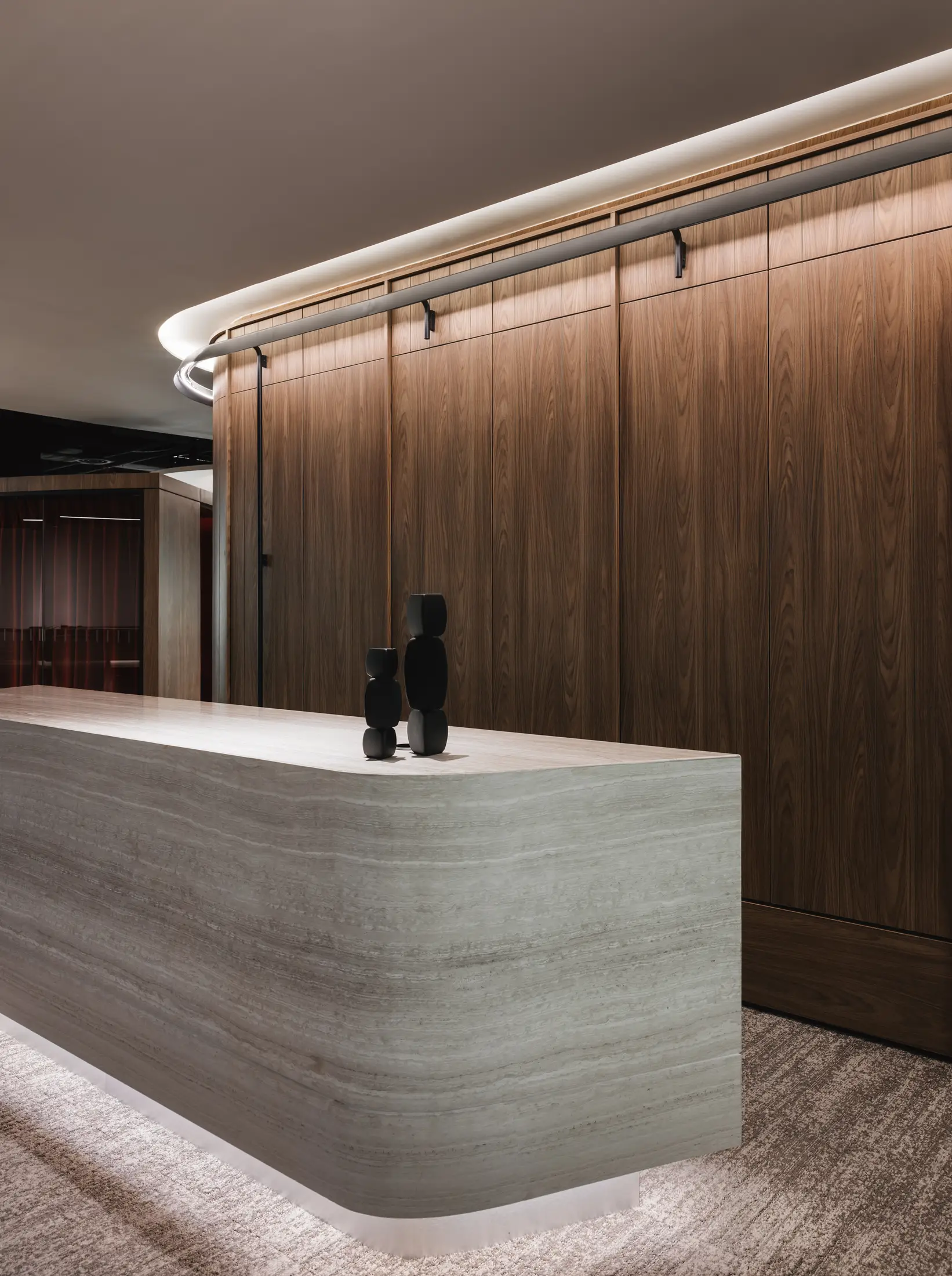
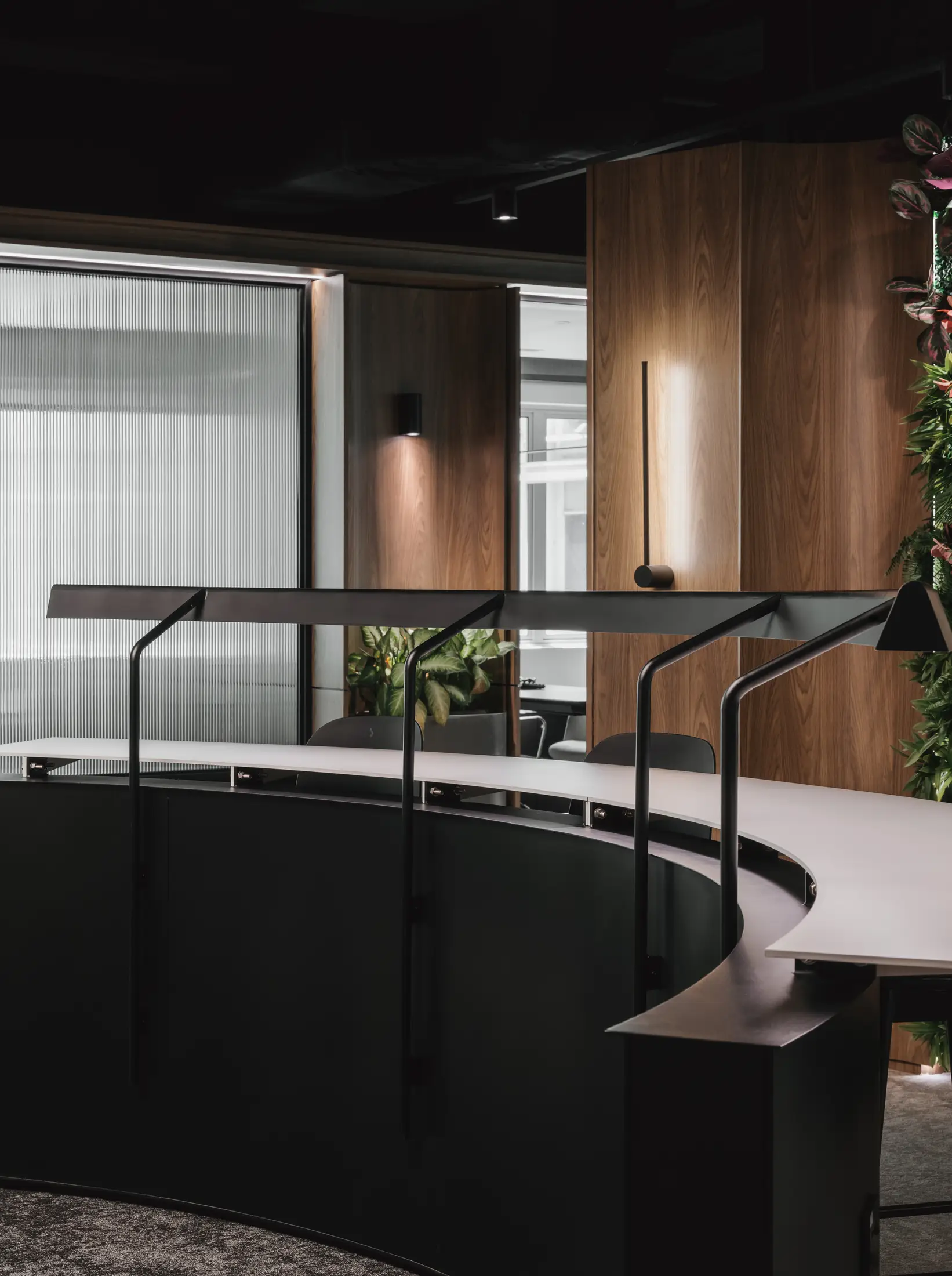
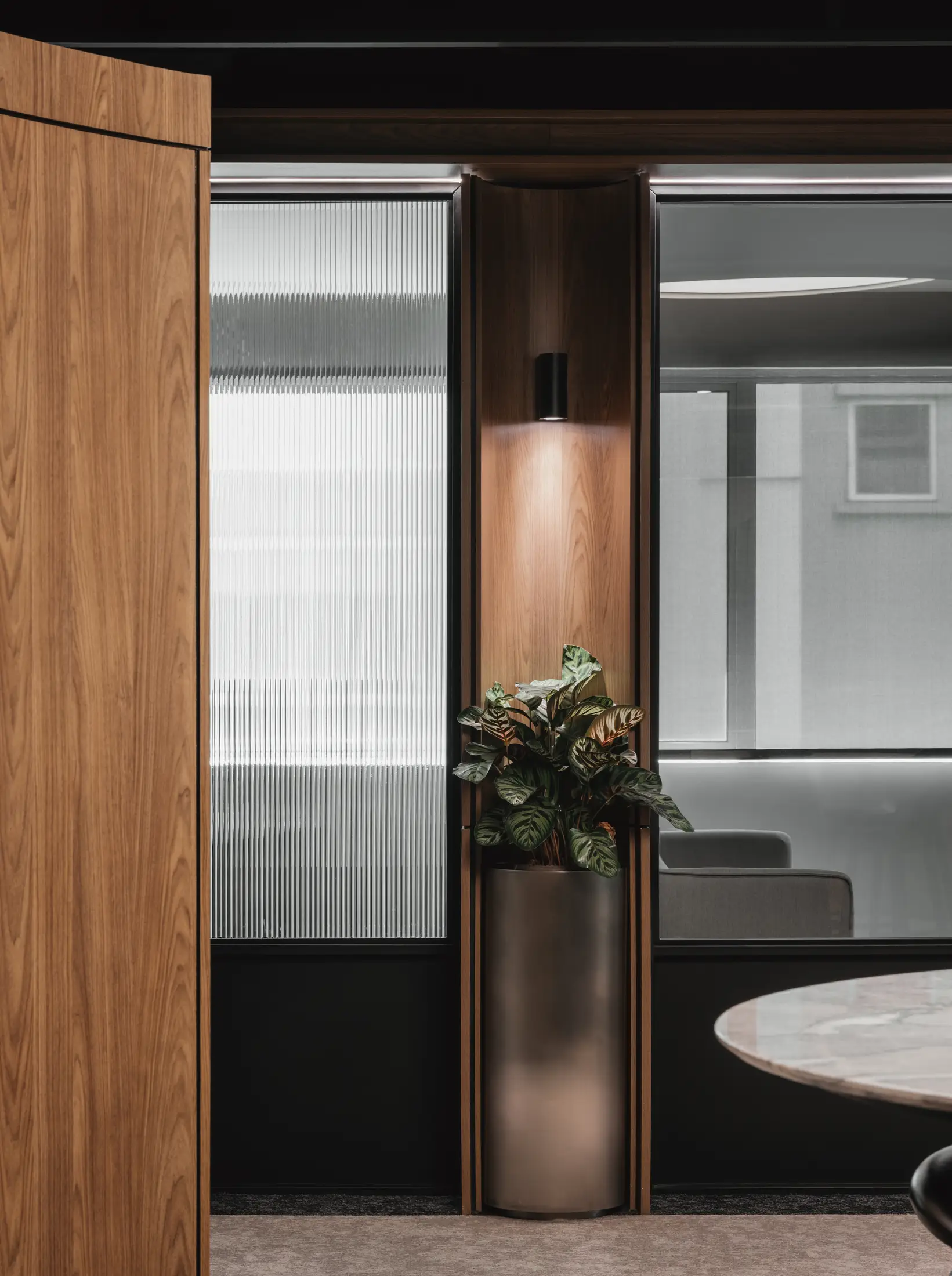
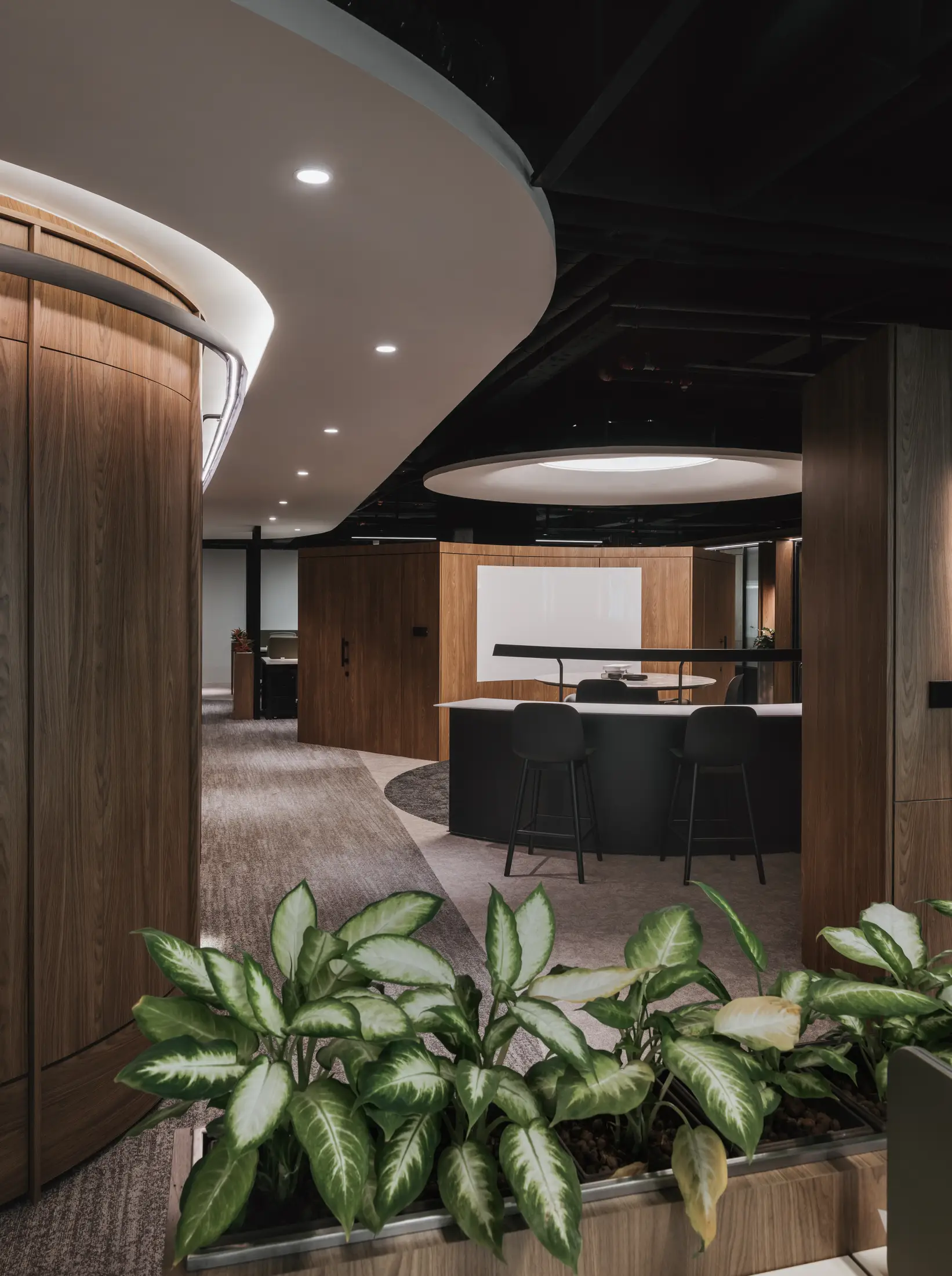
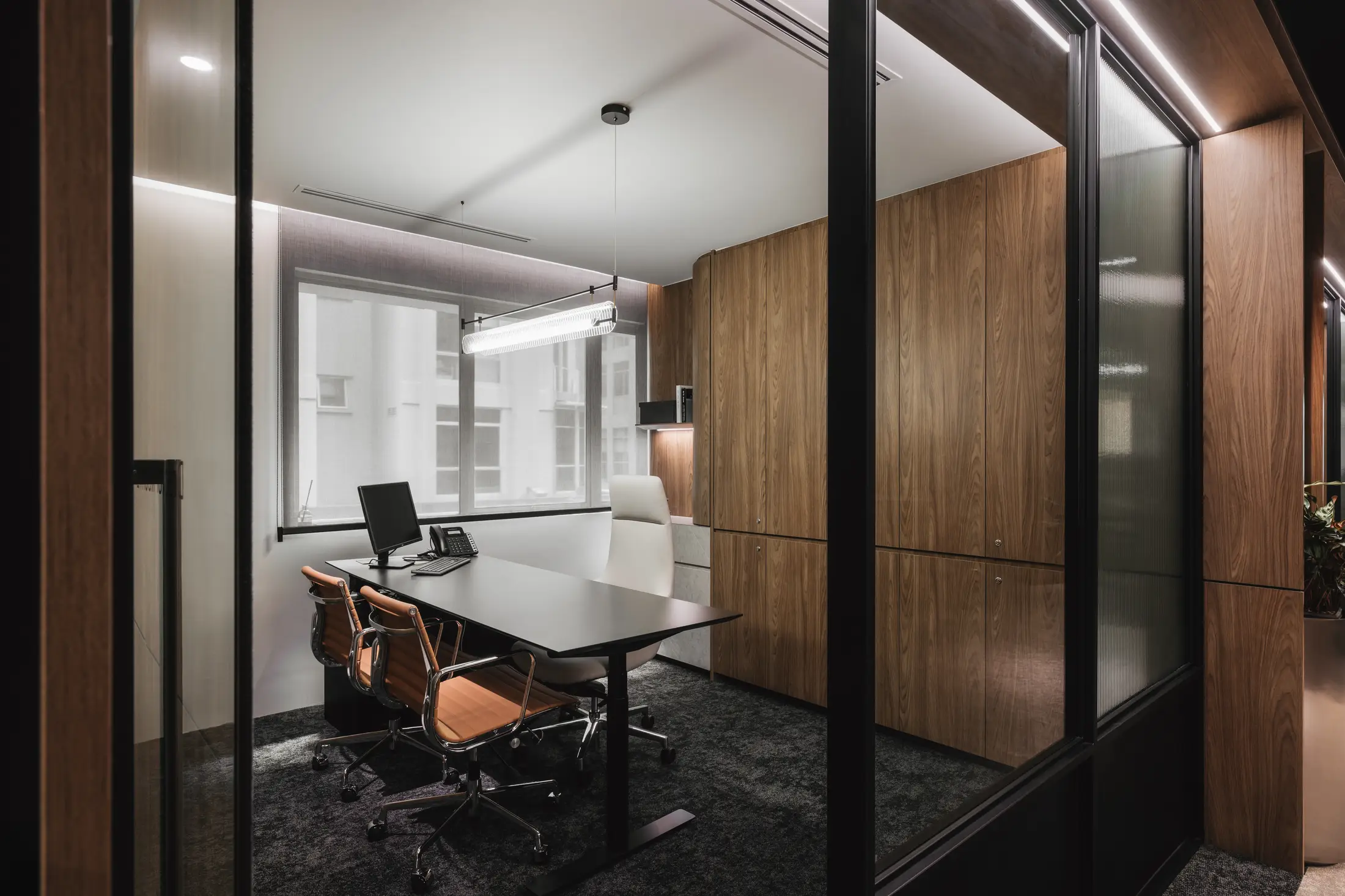
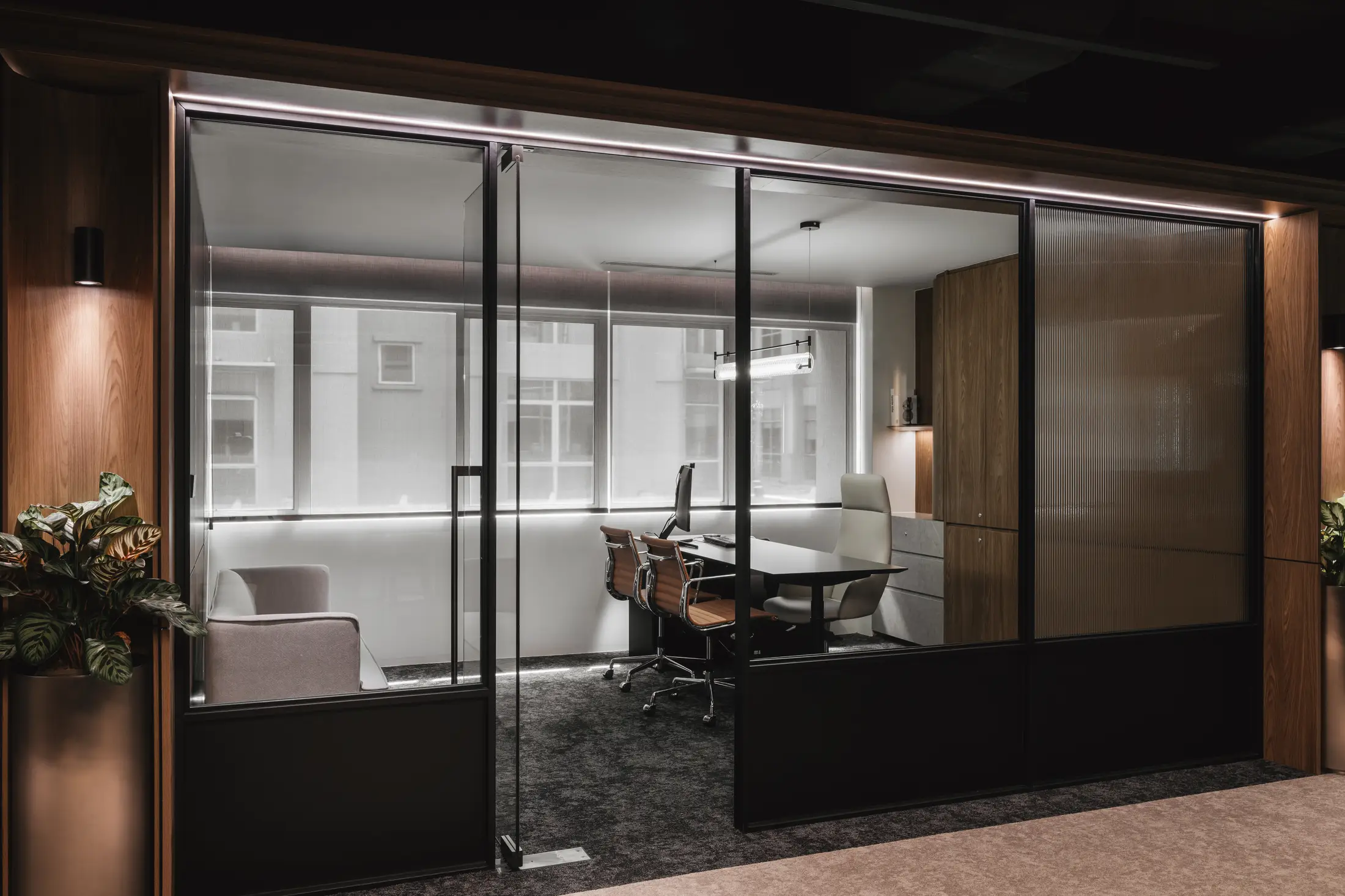
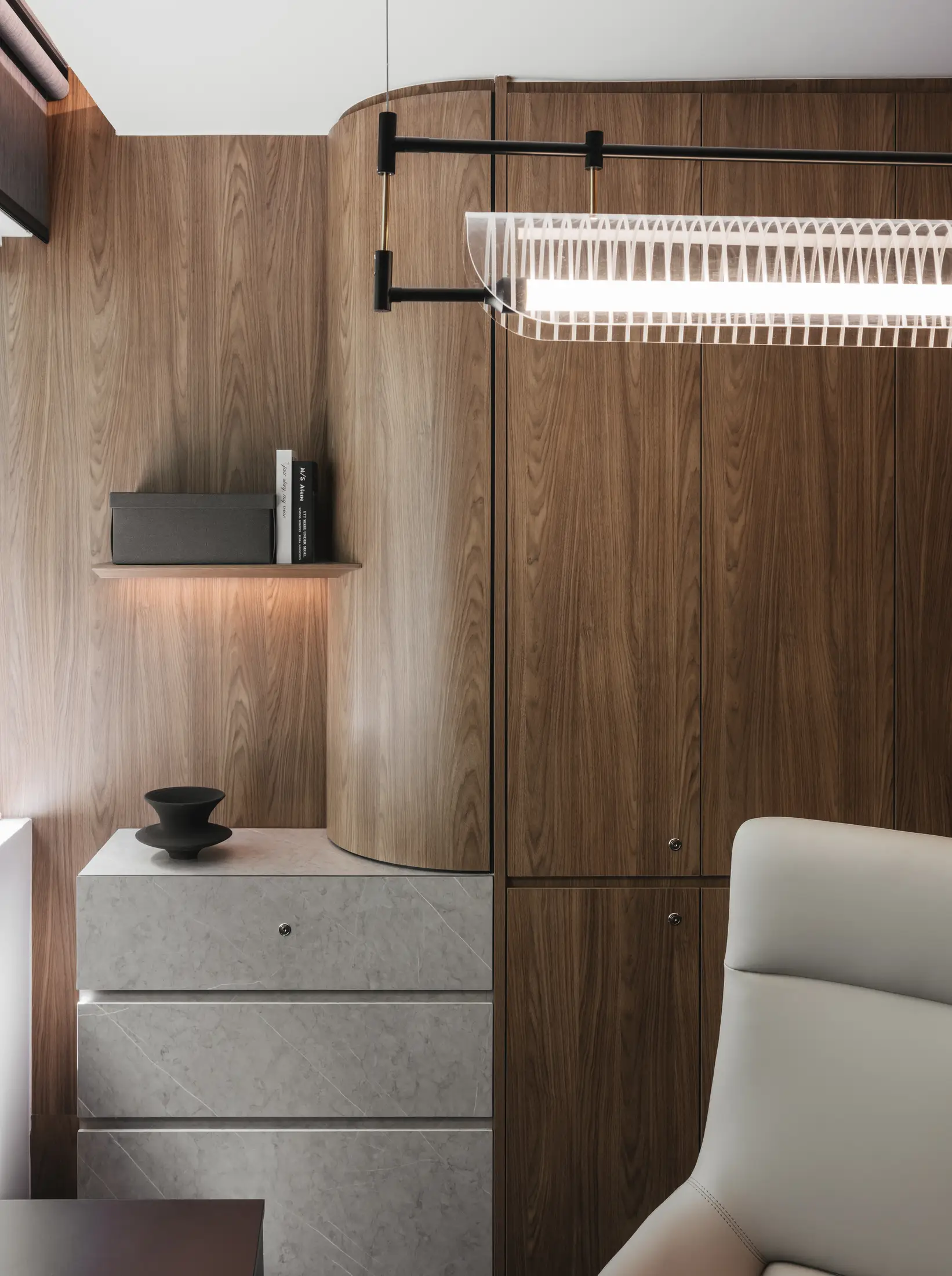
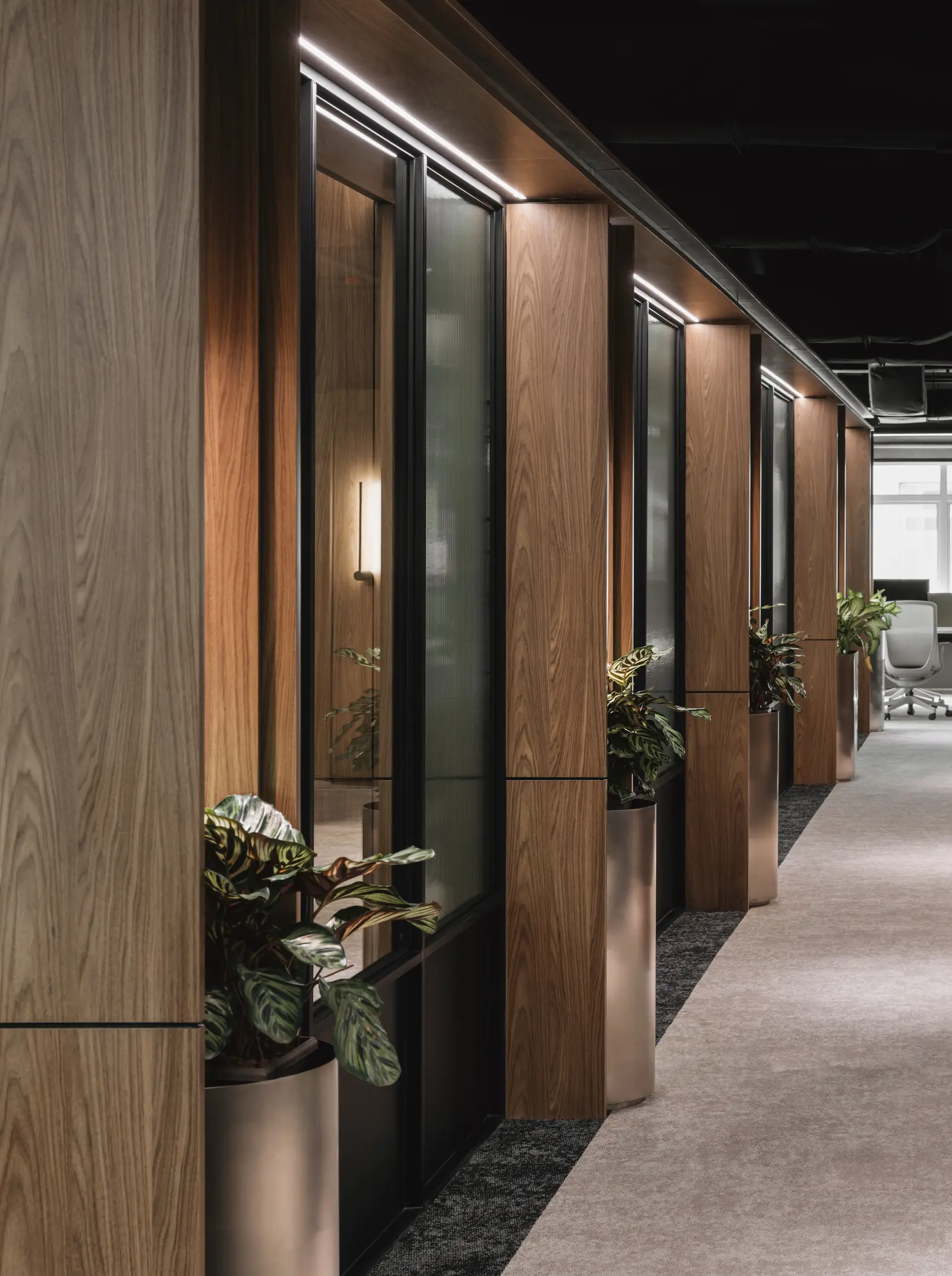
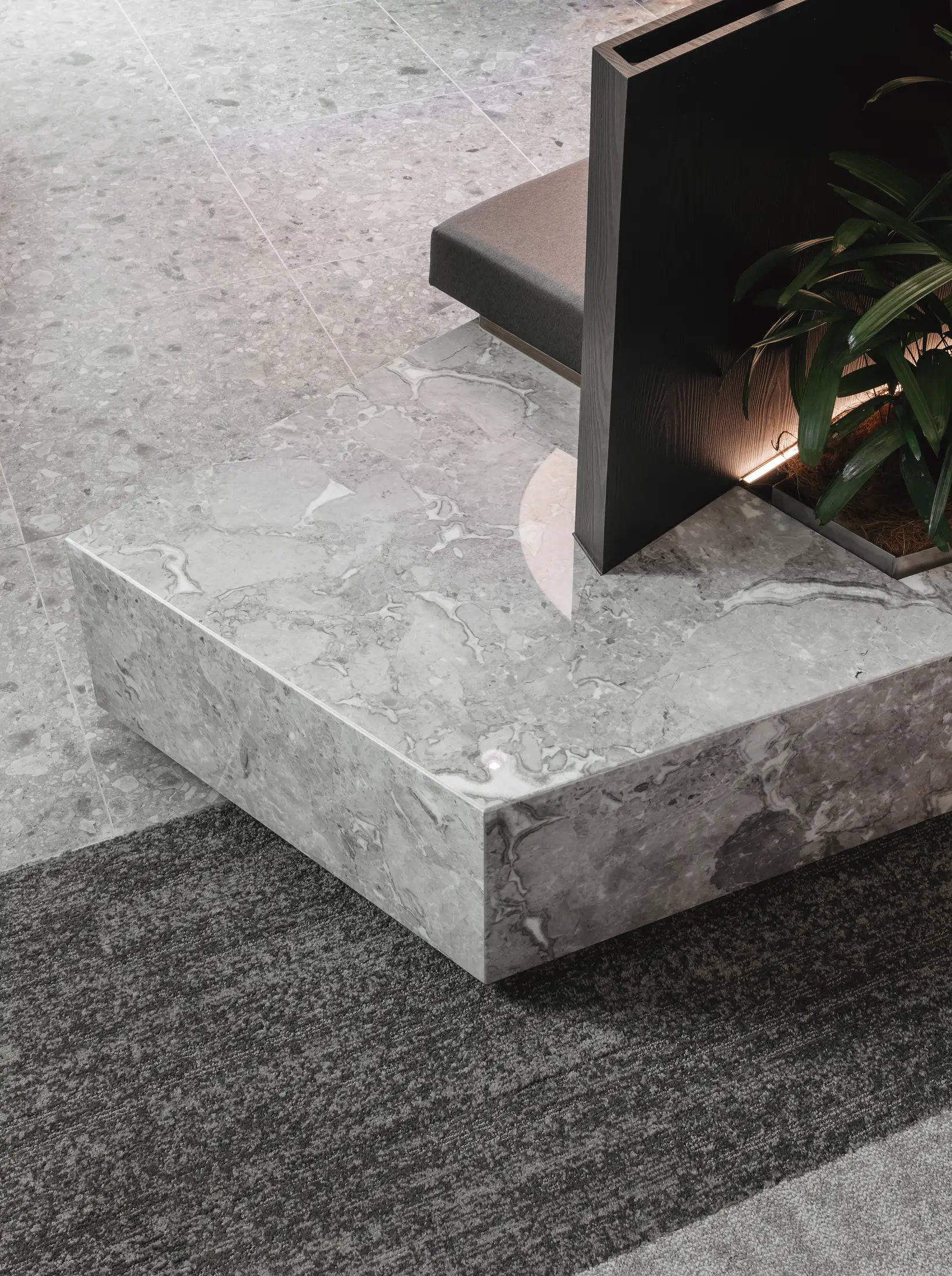
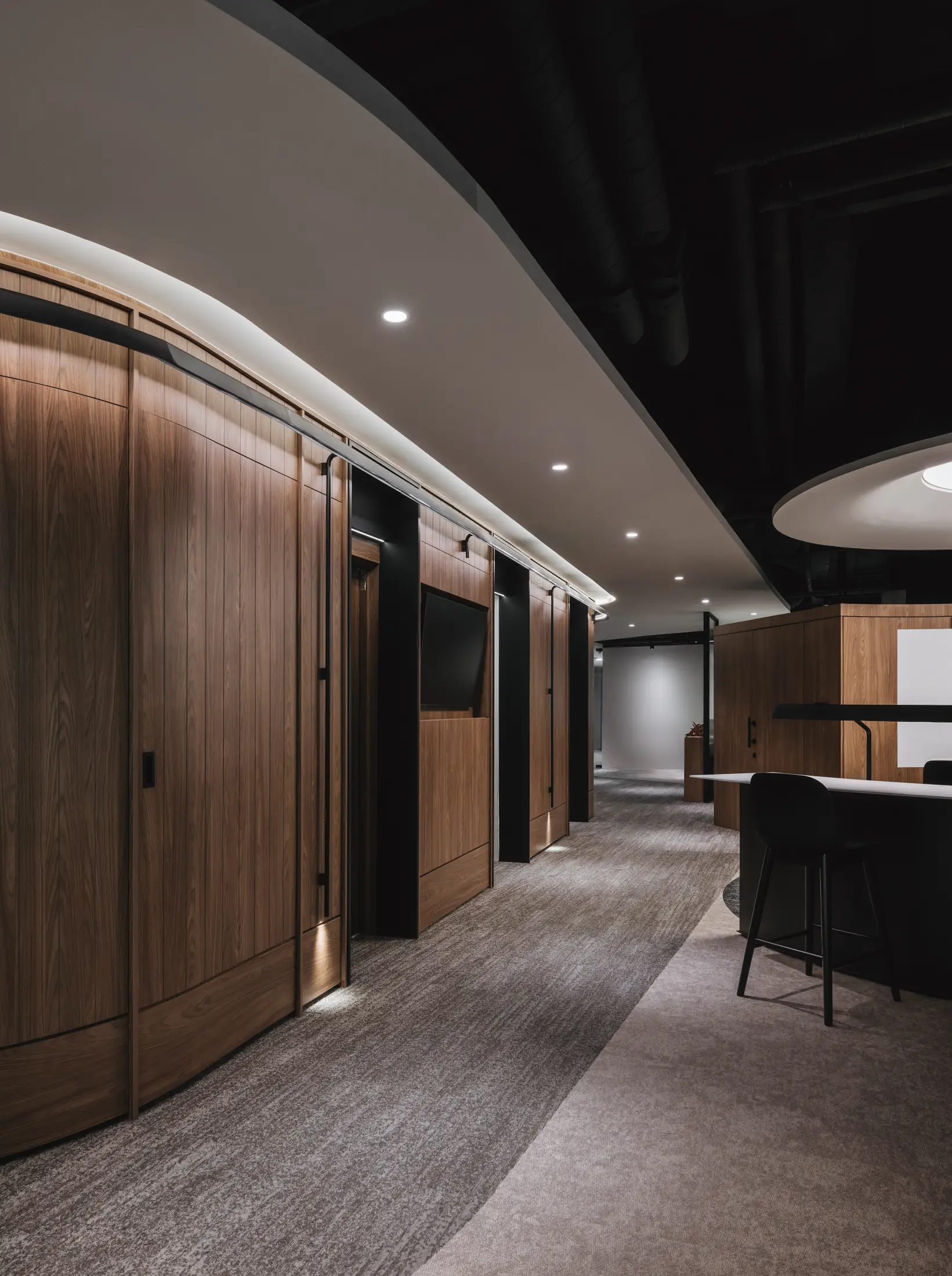
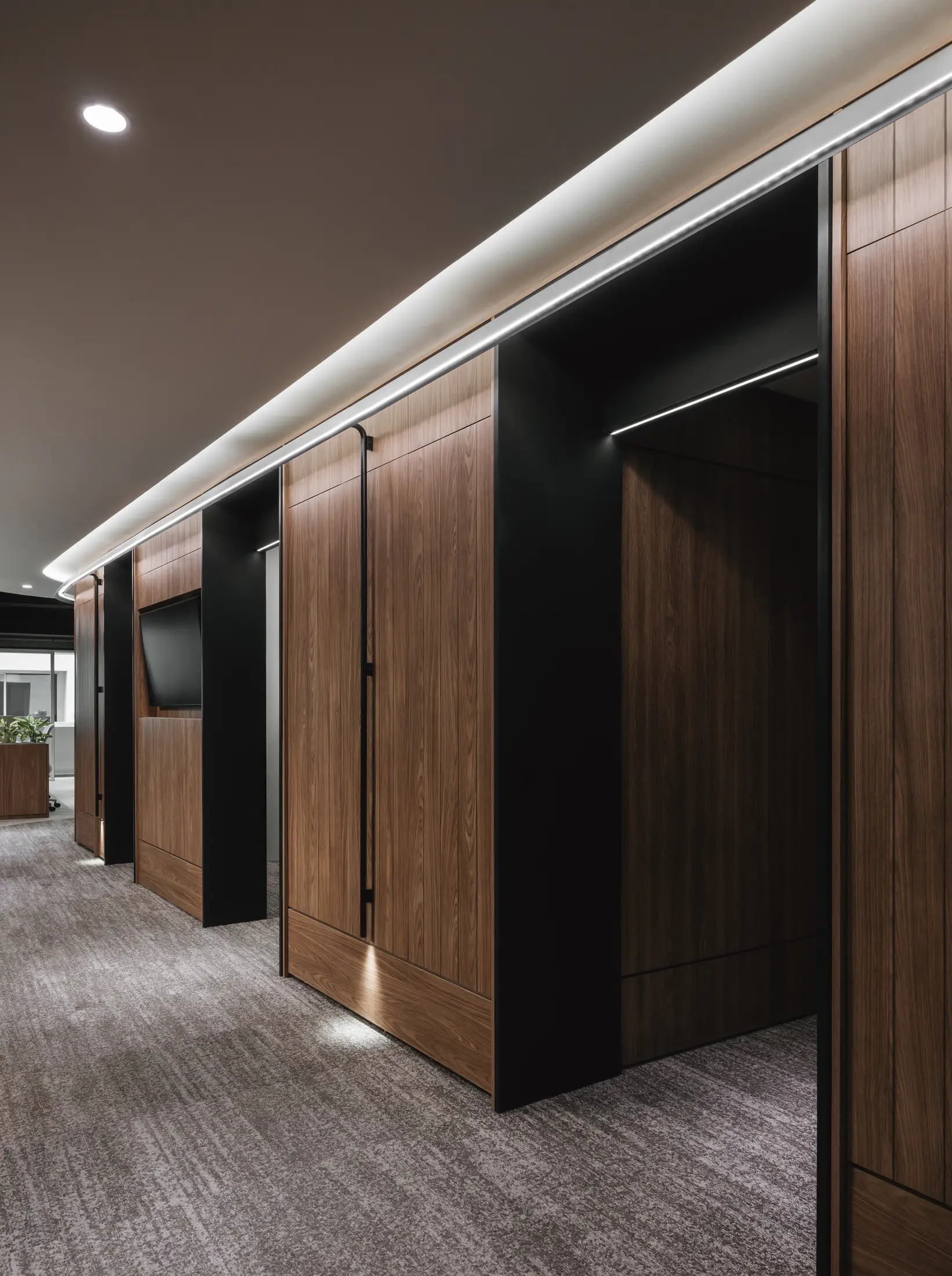
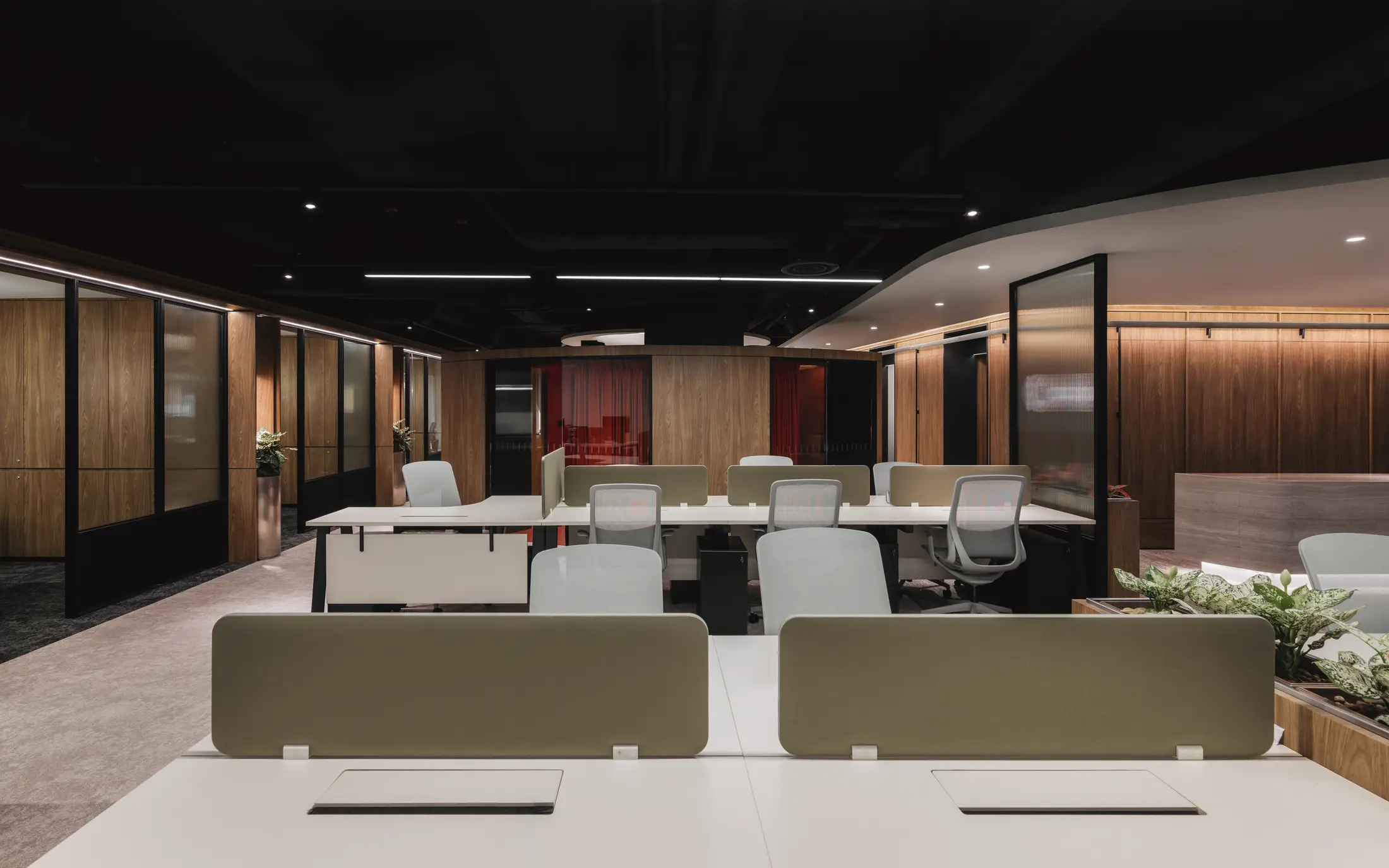
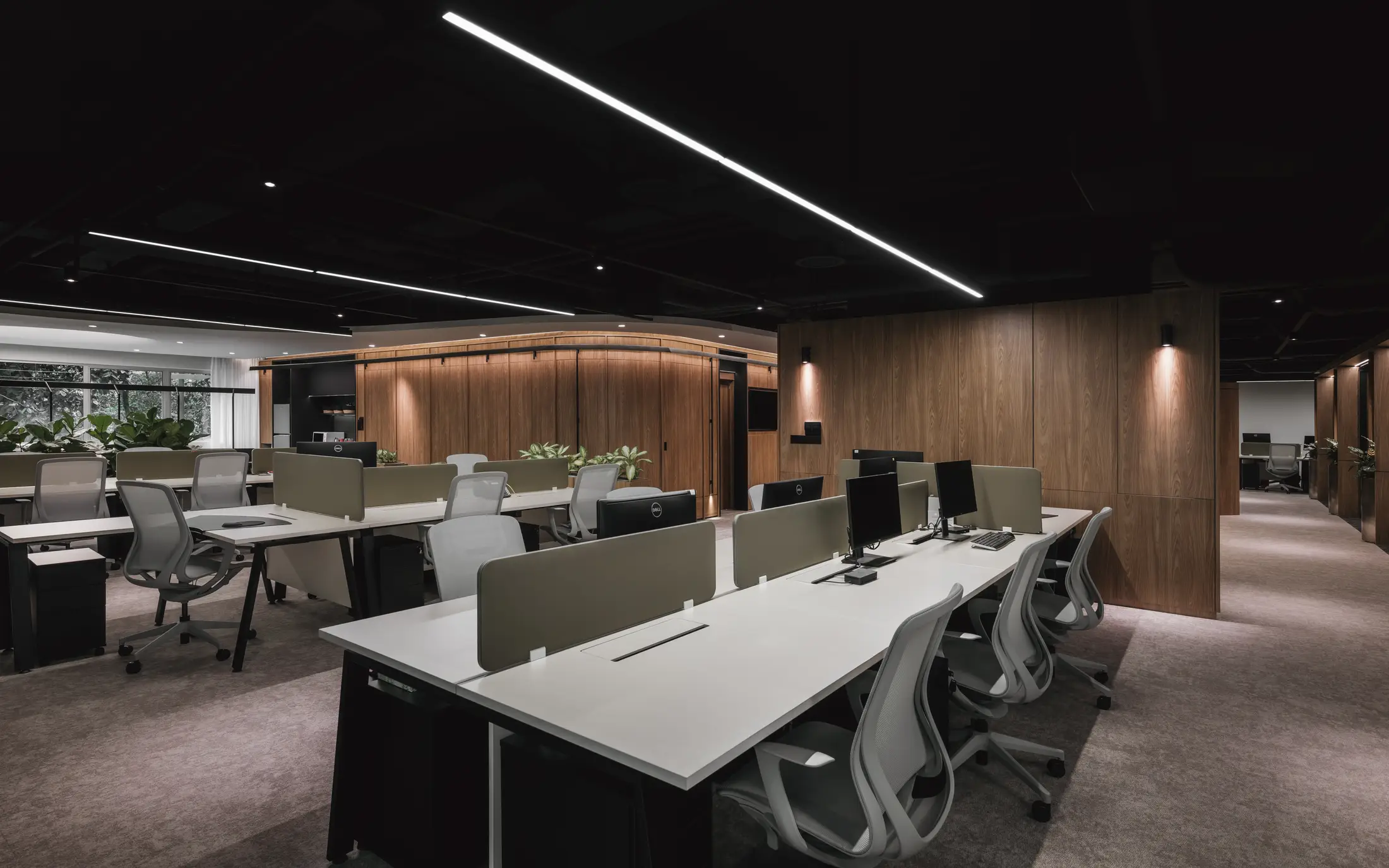
This corporate office renovation reimagines organizational identity through spatial intelligence, balancing corporate rigor with human-centered fluidity. Eschewing traditional austerity, the design materializes reliability through clean geometries, glass partitions, and a restrained palette of polished stone, brushed metal, and warm timber. Transparency governs the layout: dematerialized glazed walls dissolve departmental barriers, while a central open-office spine maintains visual connectivity through strategic acoustic buffers.
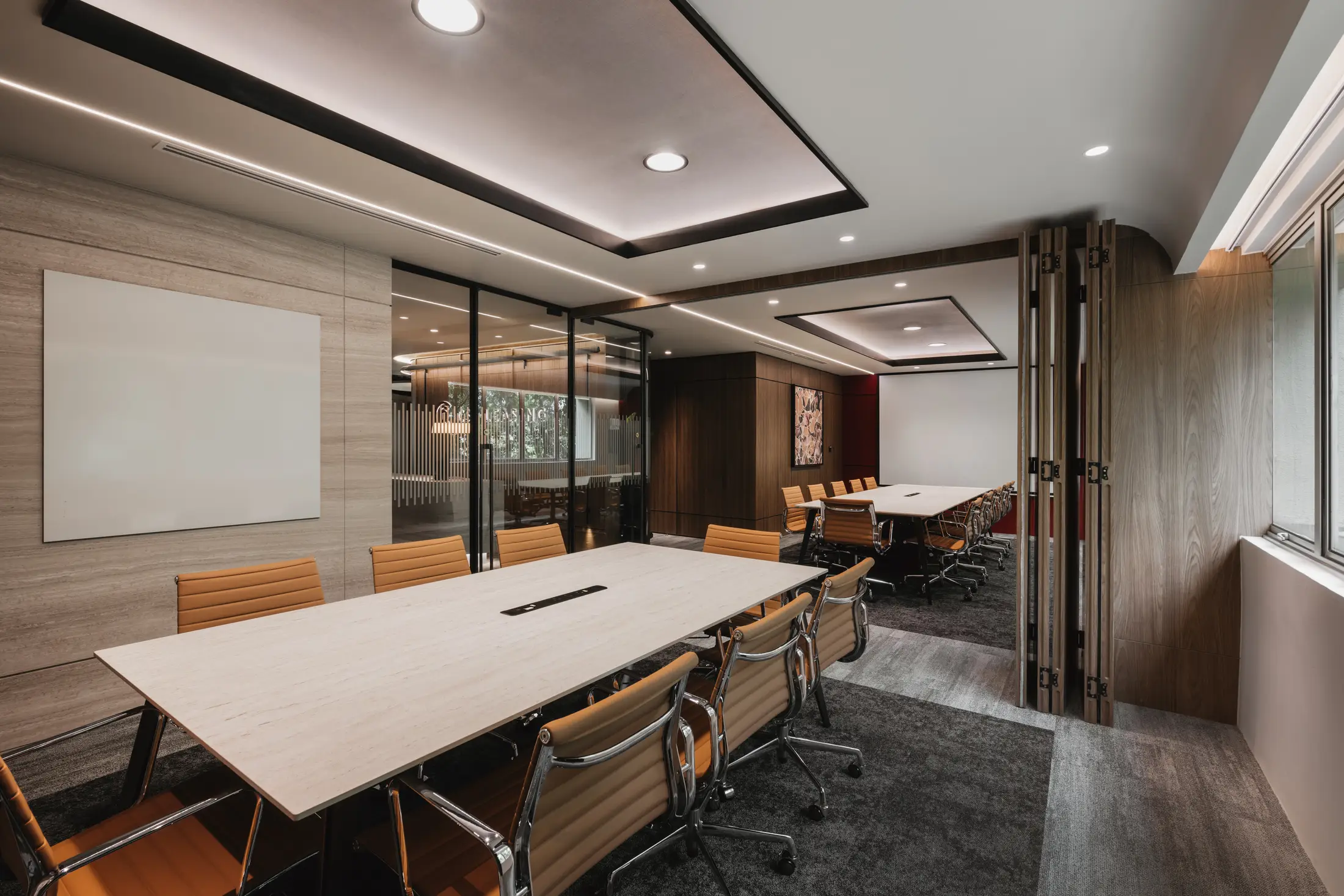
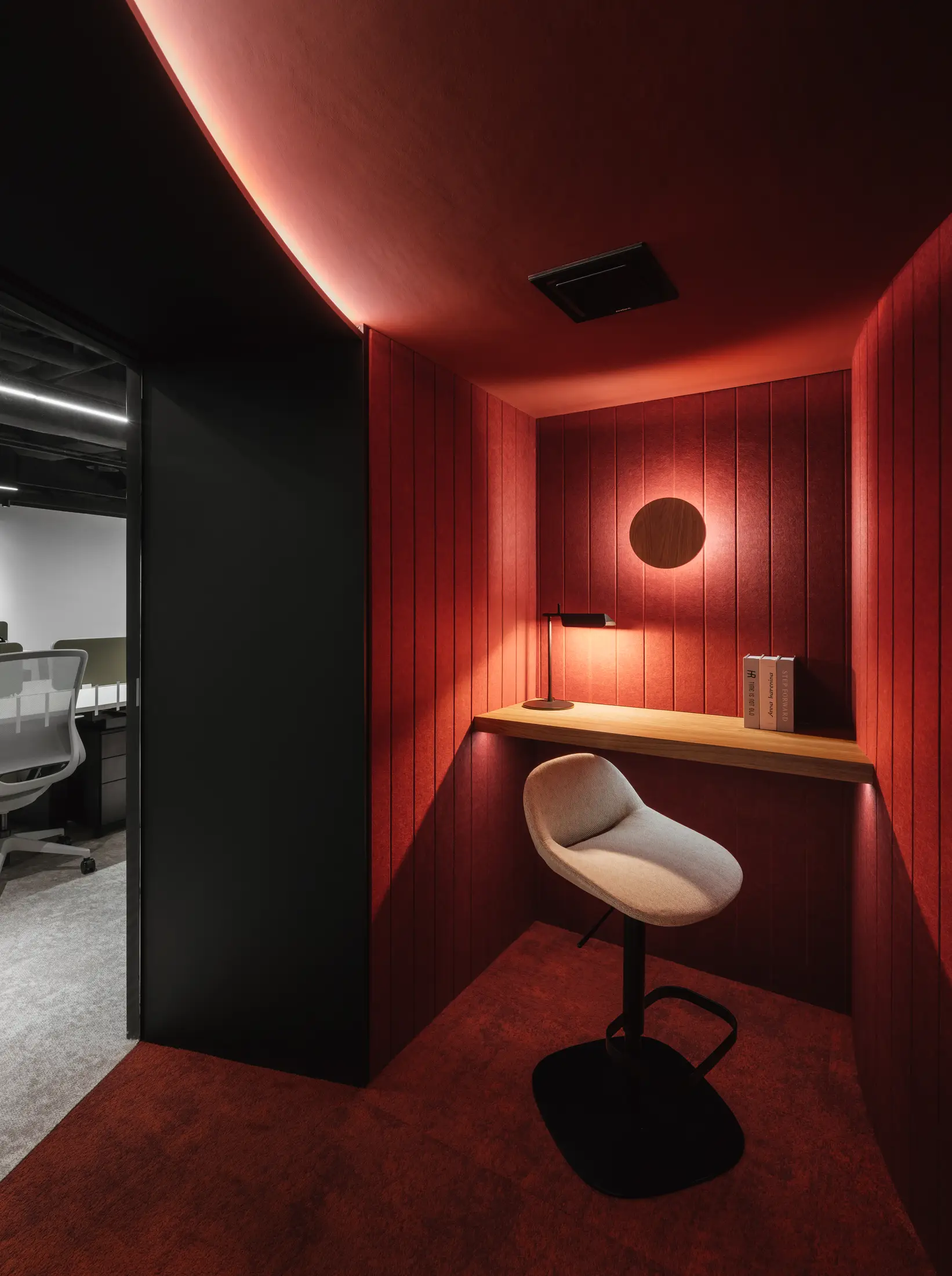
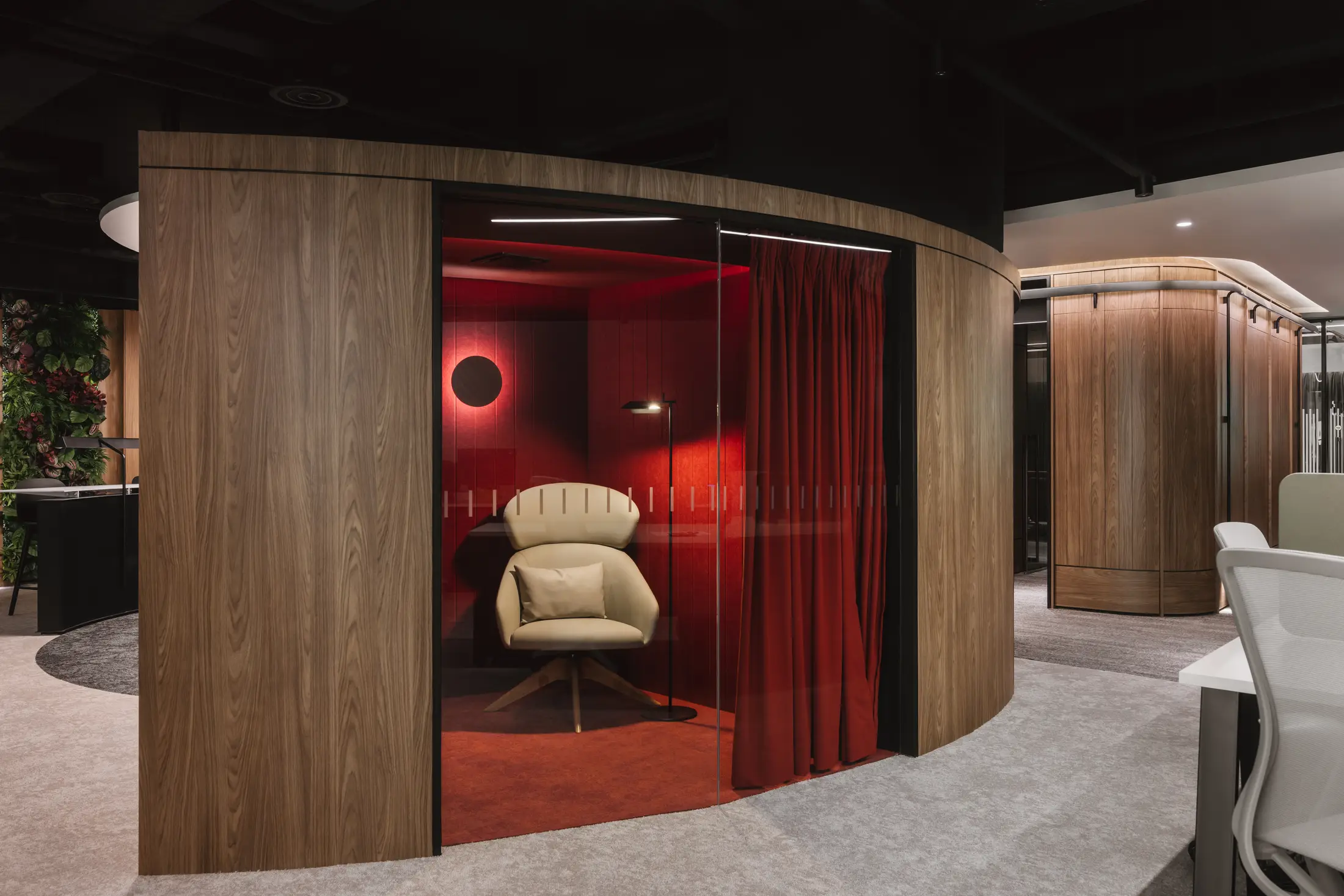
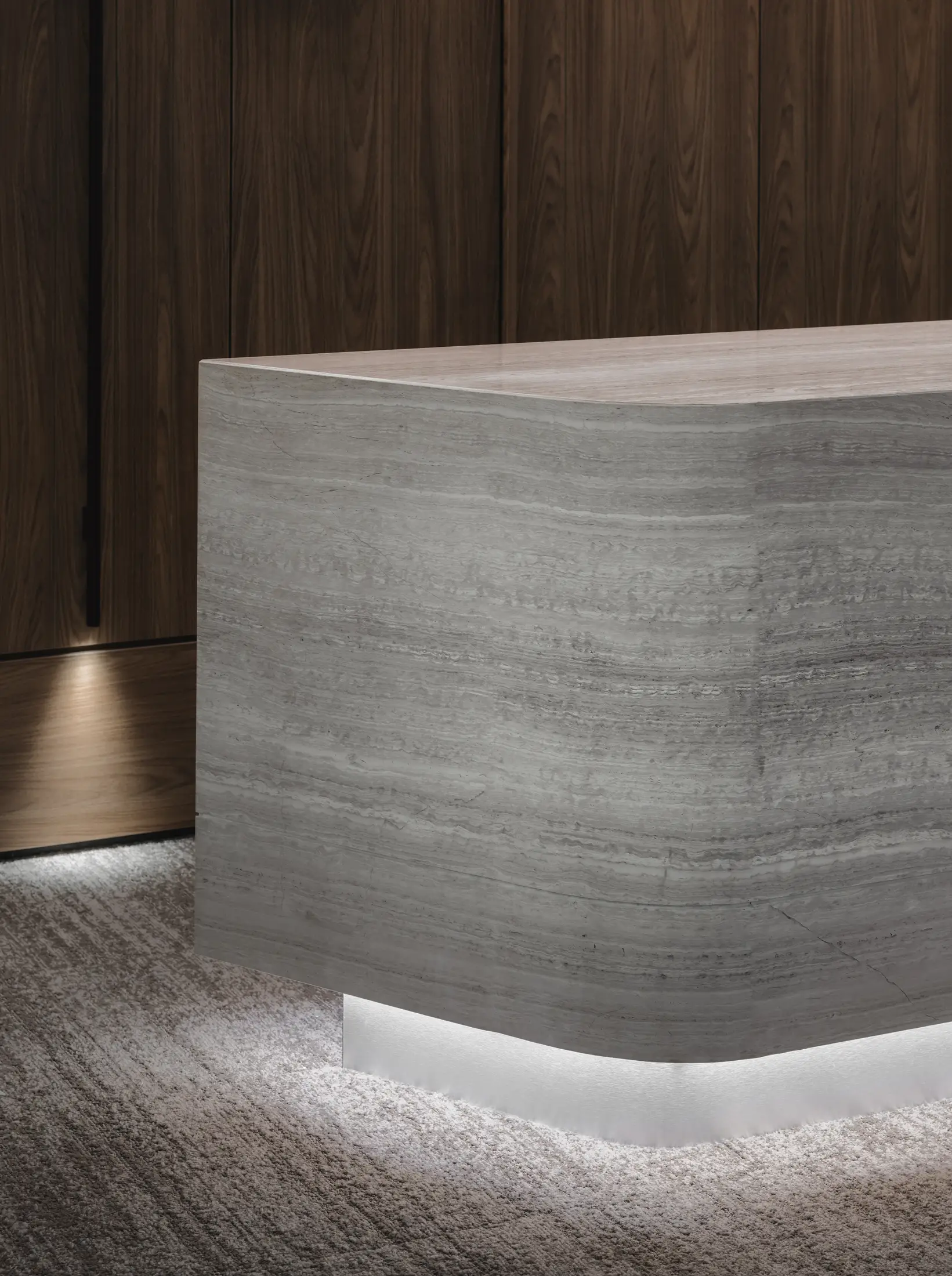
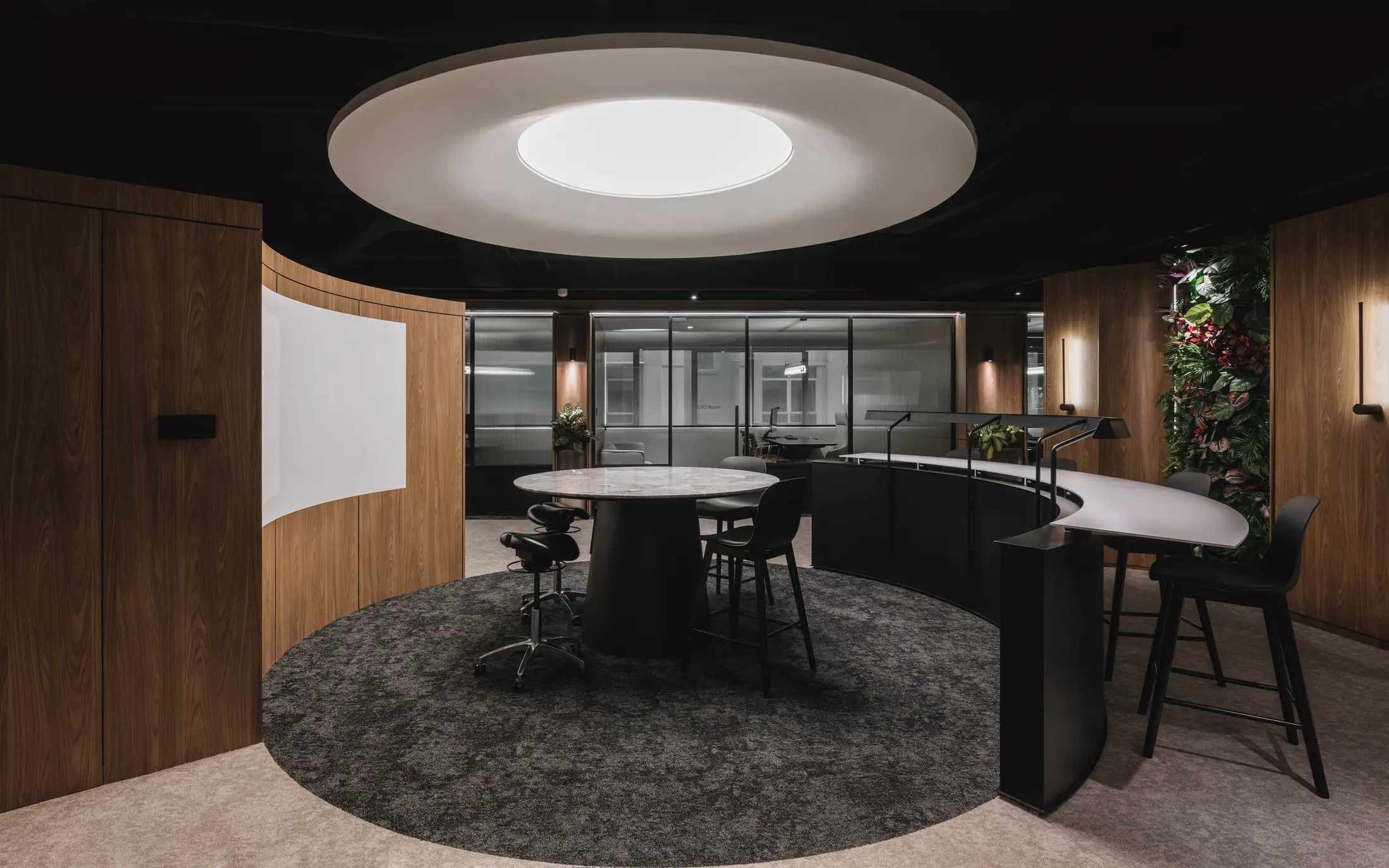
Spatial organization follows a 60-20-20 zoning ratio (private–semi-public–public), enhanced by workflow-optimized adjacencies. A double-height reception clad in monolithic stone and backlit glass serves as volumetric branding—imposing yet permeable. Collaborative hubs manifest as: writable-glass meeting rooms, soundproofed focus pods, and a leisure zone with organically shaped seating that counterpoints the architecture’s rectilinear discipline. Executive suites, strategically positioned for oversight, employ frosted-glass sliders to modulate transparency gradients.
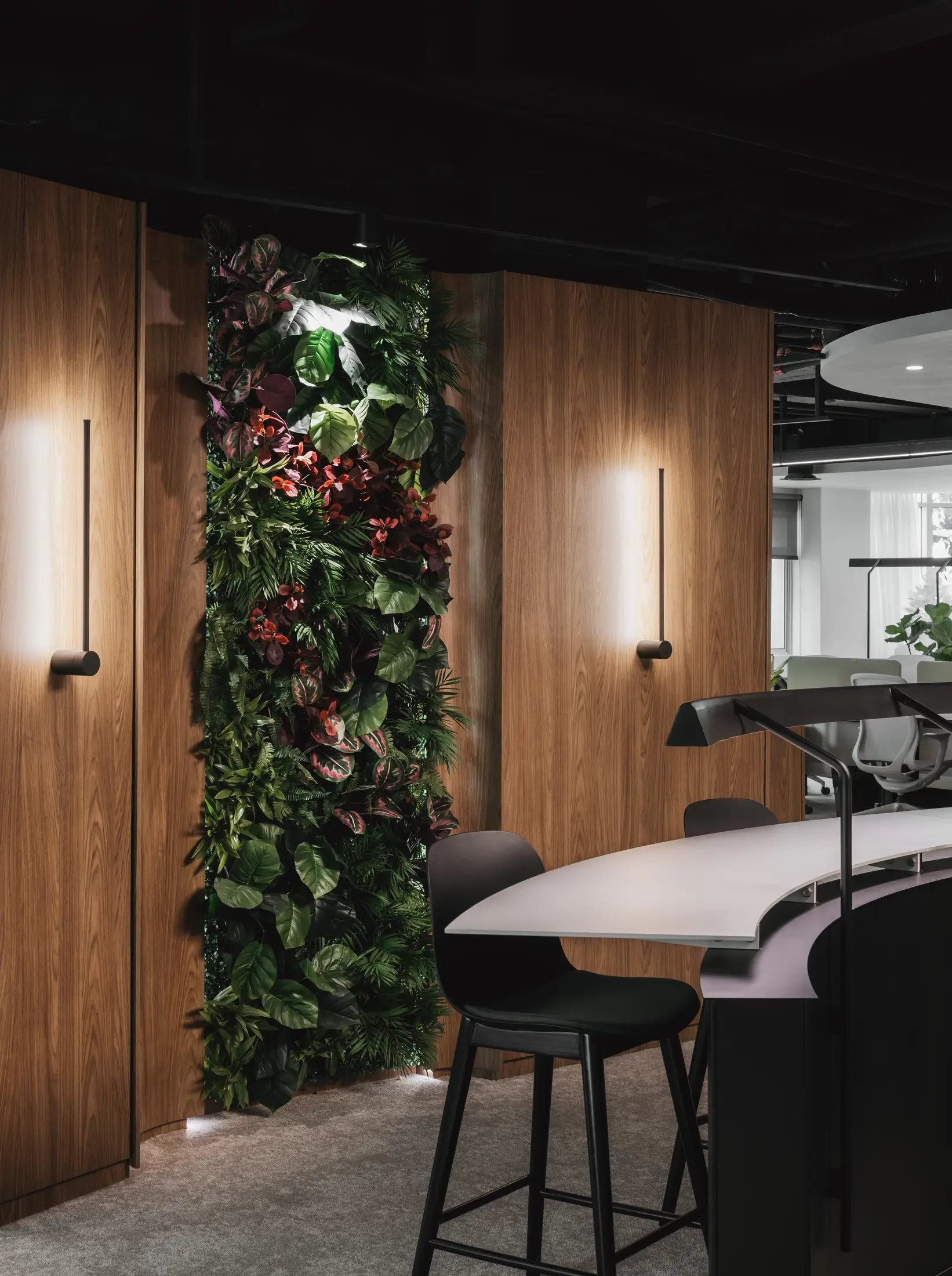
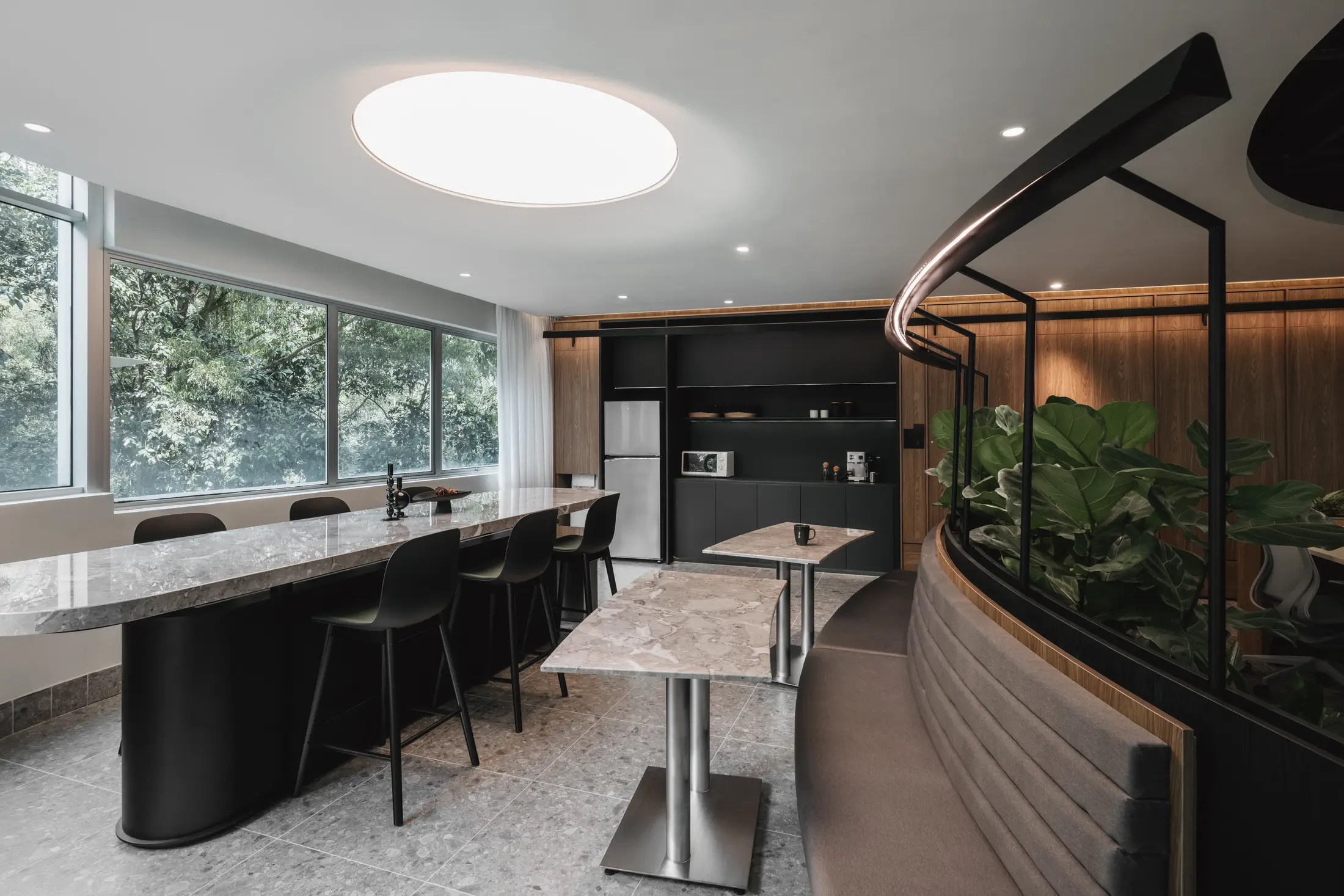
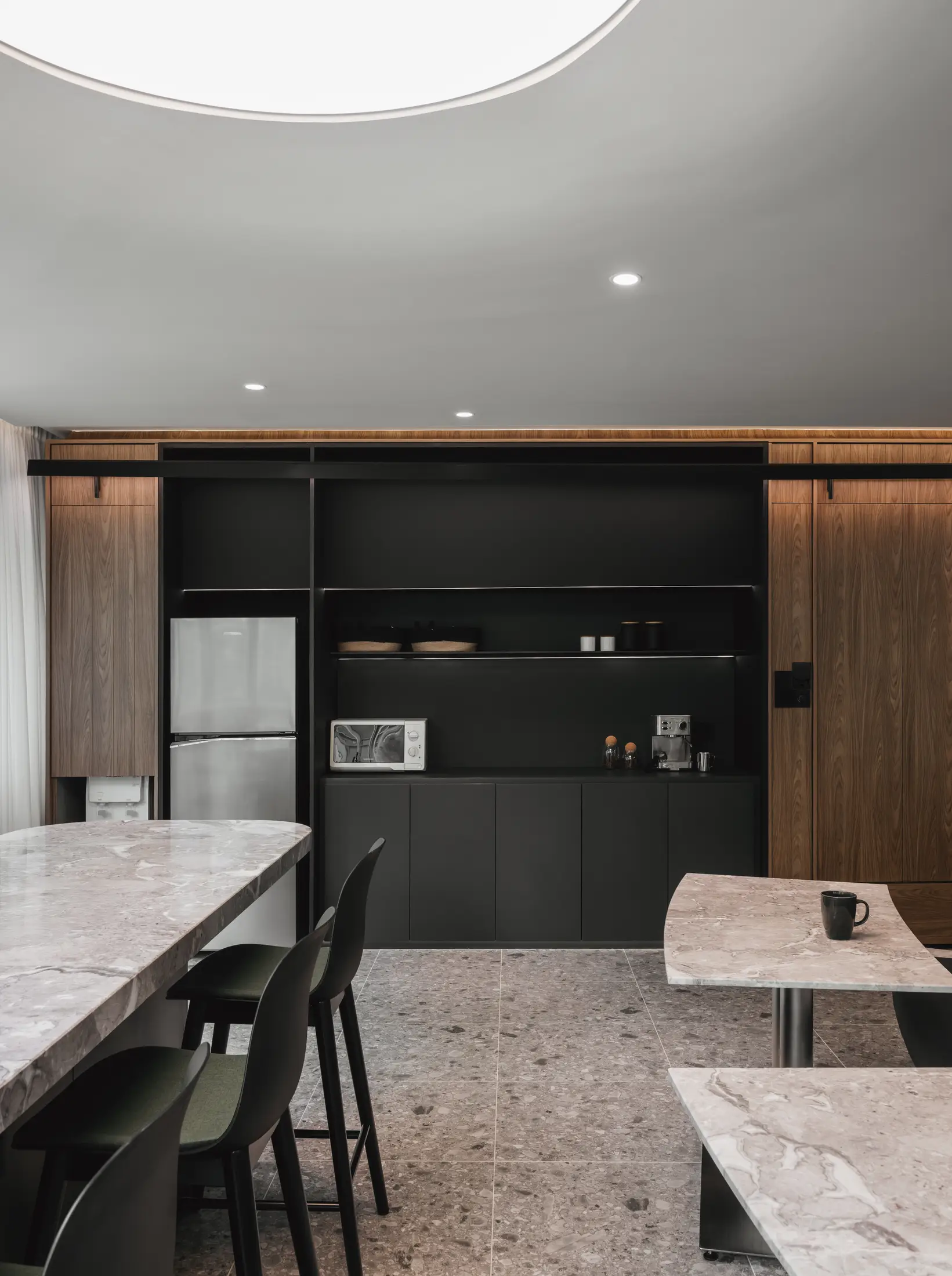
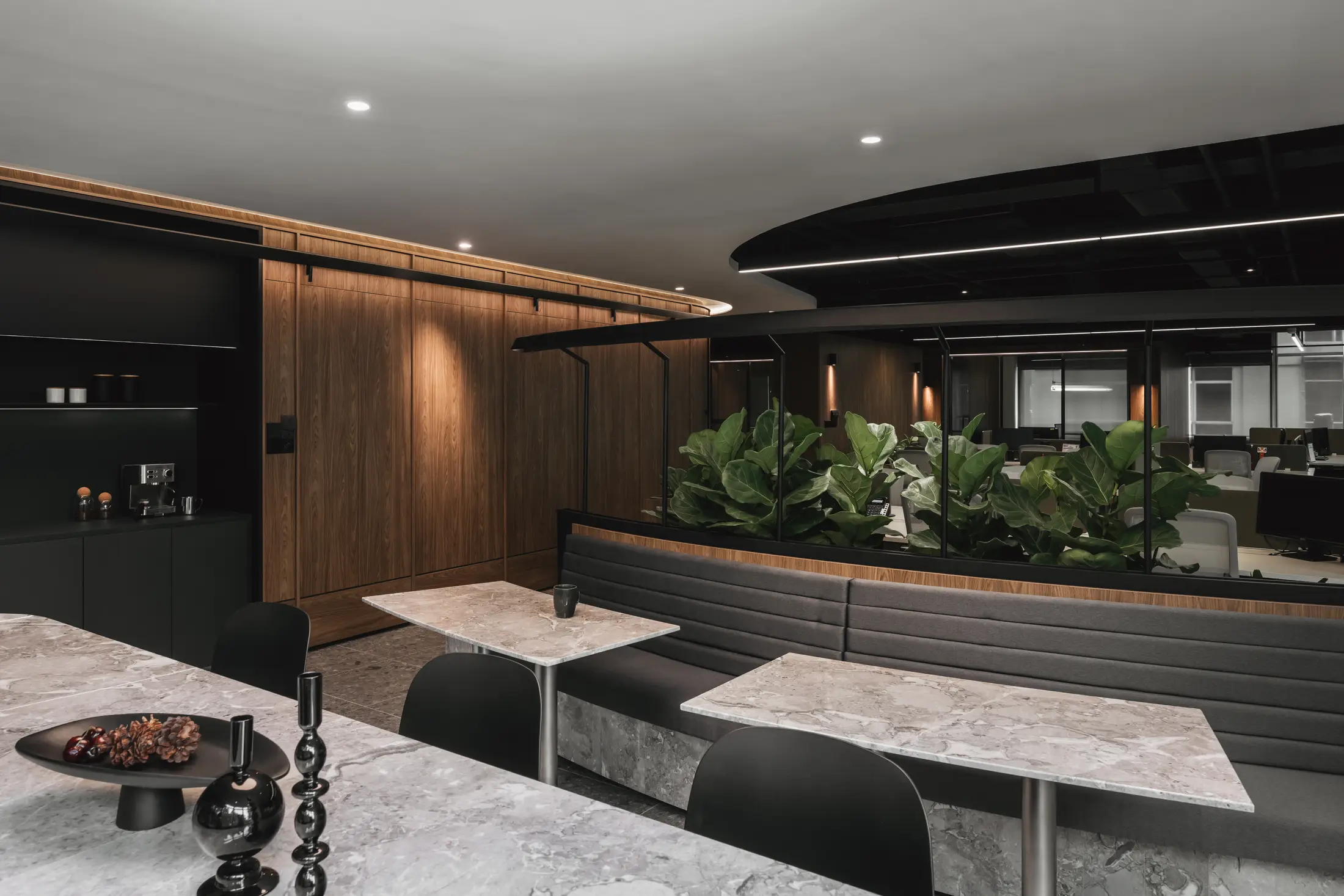
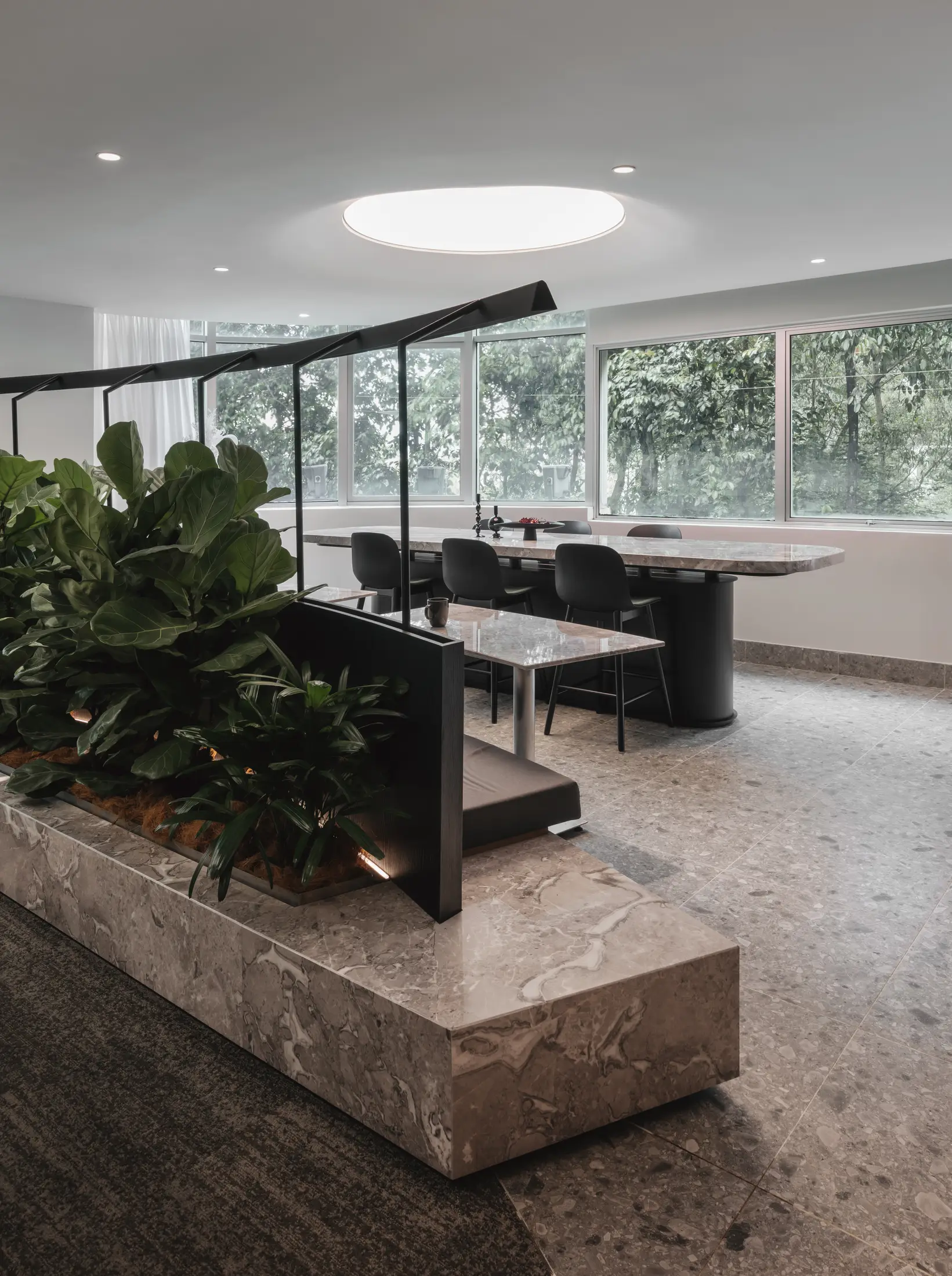
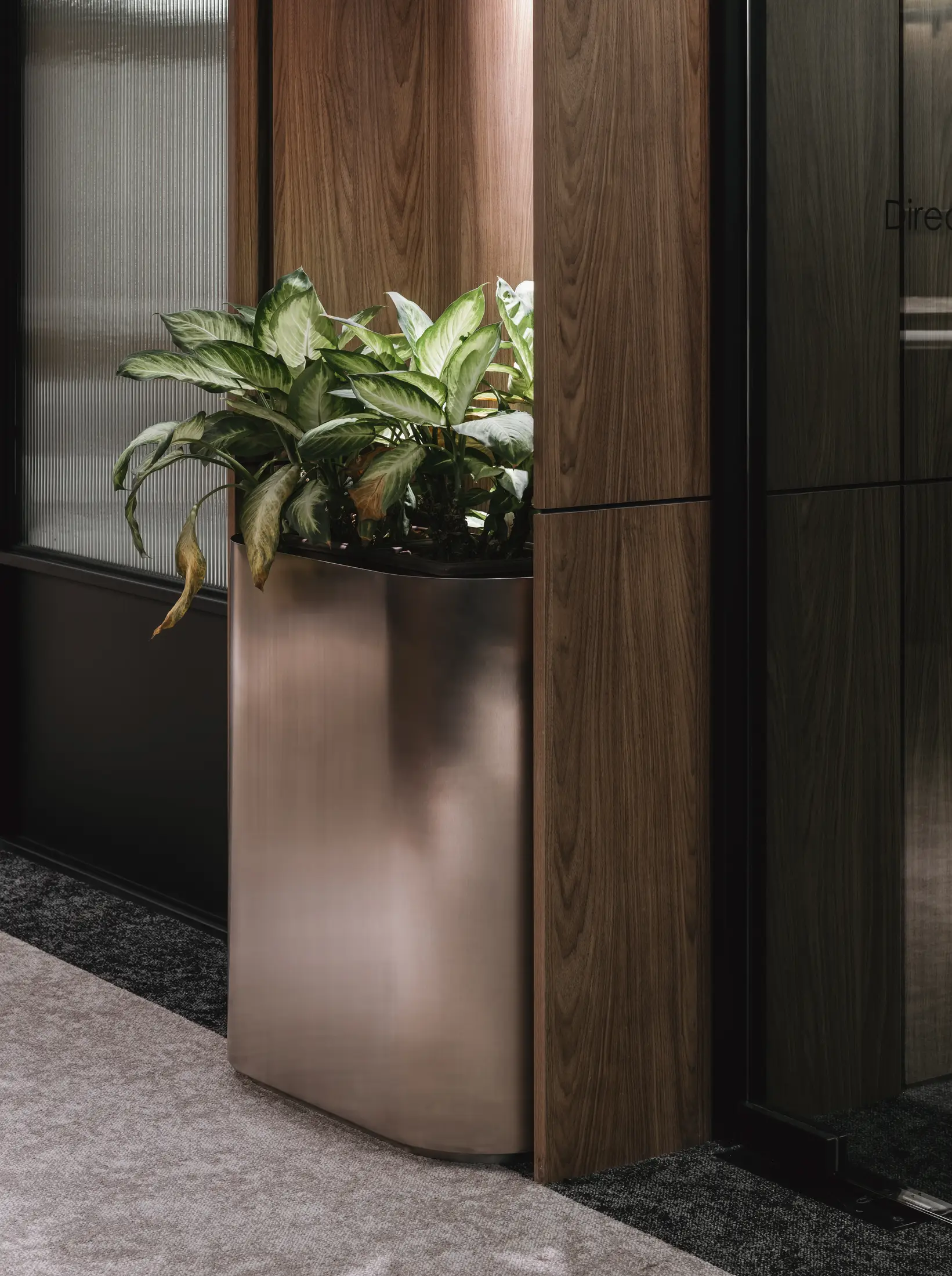
Material dialogues emphasize duality: terrazzo floors unify communal zones, while suspended acoustic clouds and felt panels temper ambient noise. A muted base palette (slate, navy, taupe) gains vitality through biophilic interventions—vertical planters and desk-integrated succulents that soften corporate edges.
Adaptive systems future-proof operations: mobile shelving reconfigures storage layouts, while server-room modular racking accommodates technological evolution. A 120-inch multifunction room screen serves dual purposes as presentation surface and all-hands communication portal.
Outcome: A tectonic equilibrium where light-permeated glass becomes allegory for operational clarity. Each intervention—from the communal pantry island to ergonomic task chairs—orchestrates an environment fostering trust, efficiency, and collective purpose through deliberate spatial storytelling.